


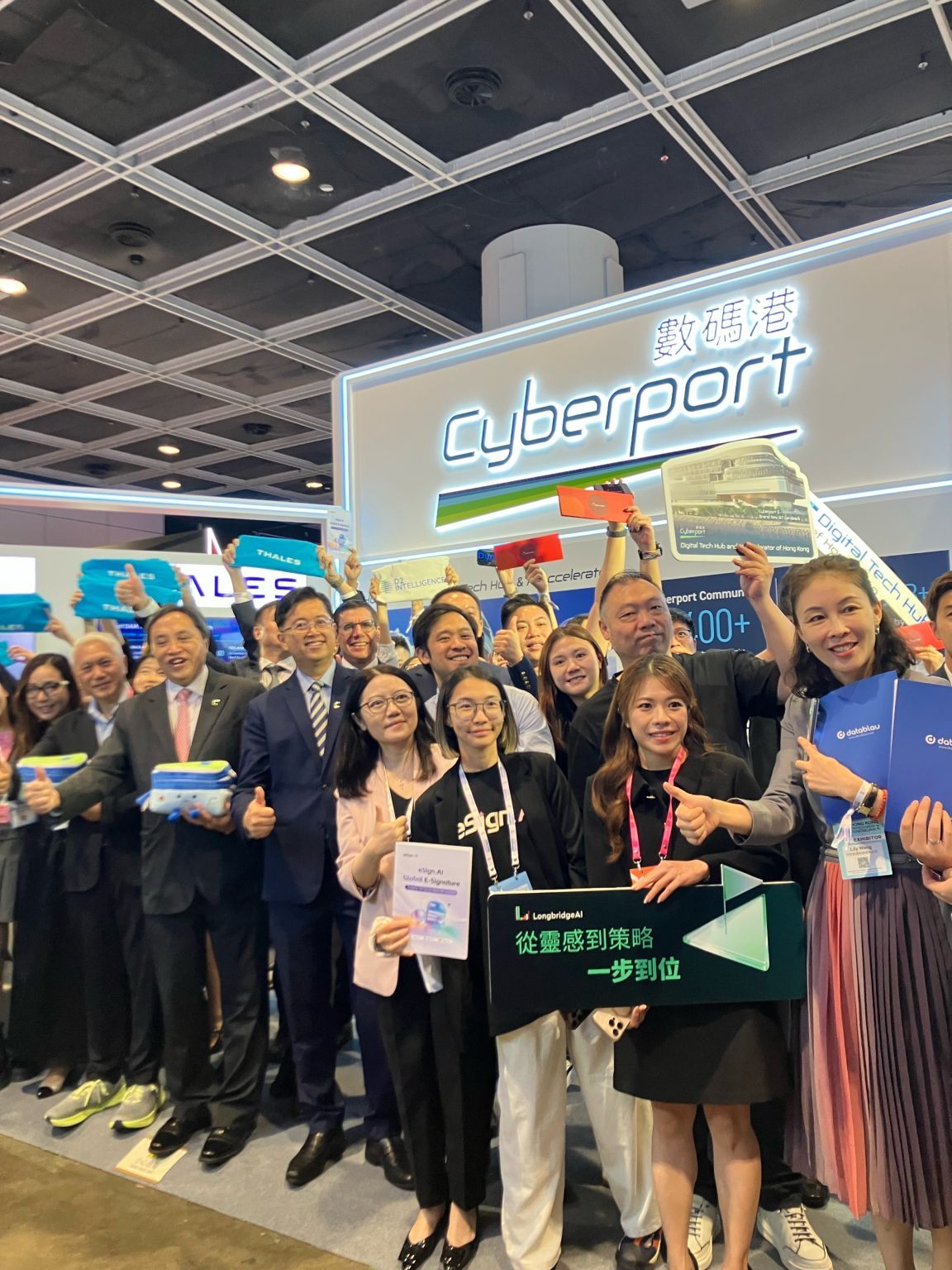
eSign.AI exhibited at Hong Kong FinTech Week 2026 on 2 and 3 November, joining the Cyberport Hong Kong pavilion at Booth 5FG-TA07 in Hall 5FG of the Hong Kong Convention and Exhibition Centre. Eleven other companies from the Cyberport community shared the pavilion.
The question under Finance+ and AI+
The week's themes were Finance+, AI+ and global expansion. Underneath them sat a narrower question that surfaced in almost every booth conversation: when a contract is signed in Hong Kong, countersigned in Singapore and stored in a third jurisdiction, what does a counterparty actually check? Not the logo on the PDF. The certificate chain behind the signature, the timestamp on the seal, and whether the identity of the signer can be confirmed without calling them.
Three regimes, one verifier requirement
Hong Kong recognises electronic signatures under the Electronic Transactions Ordinance (Cap. 553), where section 5(1) gives an electronic signature the same legal status as a handwritten one provided it is reliable. The EU reaches a similar outcome by a different route: Article 25(1) of eIDAS, Regulation (EU) No 910/2014, bars a signature from being denied legal effect solely because it is electronic, and Article 25(2) gives a qualified electronic signature the effect of a handwritten signature. The texts differ; the operational requirement does not. A verifier in either market has to validate the signature from the document itself, which is why certificate chain, trust list membership and a trusted timestamp carry more weight than any single vendor claim.
What ran at the booth
The demonstration followed one agreement end to end. Signer identity verification at the front, including corporate authorisation where the signer acts for an entity. A tamper-evident seal on the finished document. An audit trail recording who signed, when, from where and with which credential. After signing, clause review and obligation tracking run over the sealed file, so the AI layer works on a document whose integrity was fixed at the moment of signing. The point made to founders and investors was that these are four outputs of one workflow, not four integrations to reconcile later.
Cross-border operations
eSign.AI's trust services are used by organisations in more than 100 countries and regions. For Hong Kong groups with mainland, Southeast Asian and European operations, that means a signature produced for one market can be presented in another with its evidence intact.
Where to follow up
Teams that need a specific corridor validated, whether Hong Kong to the EU, Hong Kong to mainland China or an intra-APAC flow, can start with our comparison of how APAC and EU regimes treat a foreign signature.
Cross-border signature recognition: APAC vs EU
Event: Hong Kong FinTech Week 2026, 2-3 November 2026, Hong Kong Convention and Exhibition Centre, Hall 5FG. eSign.AI exhibited in the Cyberport Hong Kong pavilion at Booth 5FG-TA07.