

On 12 October 2026, China's Ministry of Finance and State Taxation Administration announced that the export tax rebate on new-energy vehicles will drop from 13% to 9%, effective 1 April 2027. Read on its own, it looks like a technical tweak. Read against the EU's rulebook, it is the clearest signal yet of a structural shift in EU-China trade: the era of competing on price is closing, and the era of competing on rules — and on trusted data — has opened.
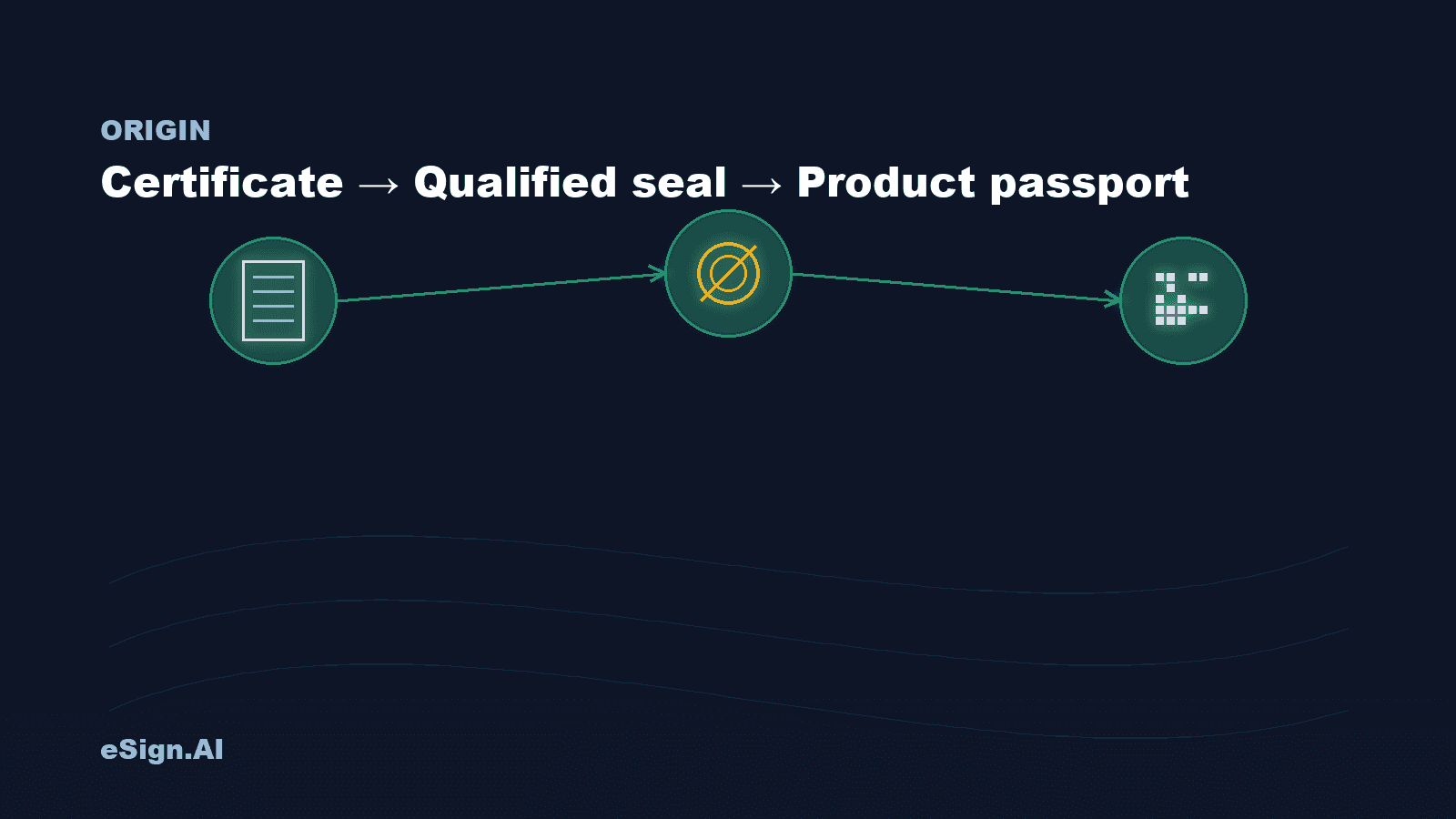
The two moves are not separate stories. They land on almost the same list of products. China is cutting rebates on batteries, new-energy vehicles and solar equipment; the EU is introducing Digital Product Passport obligations for batteries, textiles, electronics and other product groups — with the battery passport becoming mandatory on 18 February 2027. One side is withdrawing a price crutch; the other is raising a data gate. The access document that decides who keeps selling into Europe is what this article calls a passport: first the electronic Certificate of Origin (eCoC), later the Digital Product Passport (DPP).