


REST API documentation for digital signatures


Understanding REST API for Digital Signatures
In the evolving landscape of digital transformation, businesses increasingly rely on electronic signatures to streamline workflows, ensure compliance, and reduce paperwork. At the heart of many eSignature solutions lies the REST API, a powerful interface that enables seamless integration of digital signature capabilities into custom applications. From a commercial perspective, adopting REST APIs for digital signatures isn't just a technical choice—it's a strategic move that can enhance operational efficiency, cut costs, and open new revenue streams for SaaS providers and enterprises alike. This article explores the fundamentals of REST API documentation for digital signatures, highlighting best practices, key considerations, and how leading platforms implement these APIs to meet diverse business needs.
REST, or Representational State Transfer, is an architectural style for designing networked applications, emphasizing stateless client-server communication over HTTP protocols. When applied to digital signatures, REST APIs allow developers to programmatically create, send, sign, and manage signature requests without relying on user interfaces. This is particularly valuable in high-volume scenarios like contract automation, HR onboarding, or financial approvals, where manual processes can bottleneck growth.
Key Components of REST API Documentation for Digital Signatures
Effective REST API documentation is crucial for developer adoption and integration success. It should be clear, comprehensive, and example-driven to minimize implementation friction. Here's a breakdown of essential elements:
1. Authentication and Security
Digital signatures demand robust security to comply with regulations like ESIGN Act in the US or eIDAS in the EU. Documentation typically starts with authentication methods, such as OAuth 2.0 or API keys. For instance, endpoints require bearer tokens to prevent unauthorized access. Best practices include HTTPS enforcement, rate limiting, and audit logs for every API call. From a business viewpoint, strong authentication reduces liability risks and builds trust, especially in regulated industries like finance or healthcare.
2. Core Endpoints and Operations
A well-documented REST API for digital signatures revolves around standard HTTP methods: GET, POST, PUT, DELETE. Common endpoints include:
-
POST /envelopes: Initiates a new signature request by uploading documents and defining signers. Payloads often use JSON with fields like
documentBase64for file content andrecipientsarray for signer details. -
GET /envelopes/{envelopeId}: Retrieves status updates, such as "sent," "signed," or "voided." This enables real-time monitoring in integrated systems.
-
PUT /envelopes/{envelopeId}/recipients/{recipientId}/sign: Simulates or triggers a signature action, often with embedded signing for in-app experiences.
-
POST /envelopes/{envelopeId}/bulkSend: Handles batch operations for sending identical documents to multiple recipients, ideal for scaling.
Documentation should include request/response schemas using OpenAPI (Swagger) formats, with sample cURL commands or SDK code snippets in languages like Python or JavaScript. Commercially, these endpoints drive efficiency; for example, bulk send can process thousands of contracts daily, slashing administrative overhead by up to 80%.
3. Error Handling and Pagination
No API is complete without addressing failures. Responses use standard HTTP status codes (e.g., 200 OK, 401 Unauthorized, 429 Rate Limit Exceeded) alongside error bodies detailing issues like invalid signatures or quota breaches. For large datasets, such as envelope histories, pagination via query parameters (e.g., ?page=1&limit=50) ensures scalability.
4. Webhooks and Event-Driven Features
Advanced APIs incorporate webhooks for asynchronous notifications. An endpoint like POST /webhooks registers callbacks for events like "envelope-signed." This decouples systems, allowing businesses to trigger downstream actions, such as updating CRM records. In commercial terms, webhooks enable real-time analytics and automation, fostering data-driven decisions.
5. Compliance and Regional Considerations
REST APIs must align with local laws. In the US, under the ESIGN Act and UETA, digital signatures require intent to sign, consent, and record retention—APIs often enforce this via audit trails. Europe's eIDAS mandates qualified electronic signatures (QES) for high-assurance needs, with APIs supporting certificate-based signing. In Asia-Pacific regions, fragmentation adds complexity: countries like Singapore enforce the Electronic Transactions Act with Singpass integration, while Hong Kong's iAM Smart demands ecosystem-level API docking with government identities. Documentation should flag these, including region-specific payloads for biometric verification or SMS delivery.
From a business observation standpoint, the API's flexibility determines market fit. Enterprises in fragmented markets like APAC face higher integration costs due to "ecosystem-integrated" standards—requiring deep hardware/API ties to government digital IDs—versus the more framework-based ESIGN/eIDAS models in the West, which rely on email or self-declaration.

Comparing eSignature platforms with DocuSign or Adobe Sign?
eSign.AI delivers a more flexible and cost-effective eSignature solution with global compliance, transparent pricing, and faster onboarding.
Leading Platforms and Their REST APIs
Several providers offer REST APIs tailored for digital signatures, each with unique strengths in documentation quality, features, and pricing. We'll examine DocuSign, Adobe Sign, eSign.AI, and HelloSign (now part of Dropbox Sign) from a neutral commercial lens, focusing on API usability and business value.
DocuSign's REST API for eSignature
DocuSign, a market leader, provides a comprehensive REST API v2.1 through its Developer Center. Documentation is extensive, with interactive Swagger UI, code samples, and sandbox environments for testing. Key features include envelope management, bulk sends, and webhooks, supporting OAuth for secure access. For advanced users, the API integrates with DocuSign's Identity and Access Management (IAM) and Contract Lifecycle Management (CLM) tools, enabling end-to-end contract automation. Pricing starts at $600/year for the Starter API plan (40 envelopes/month), scaling to custom Enterprise tiers. Businesses appreciate its reliability for global operations, though add-ons like identity verification incur metered fees.

Adobe Sign's REST API
Adobe Sign (part of Adobe Document Cloud) offers a robust REST API 6, documented via Adobe's developer portal with Postman collections and API references. It excels in embedding signatures into workflows, with endpoints for agreements, libraries, and callbacks. Authentication uses JWT or OAuth, and it supports mega signs for bulk operations. Integration with Adobe's ecosystem, like Acrobat, adds value for PDF-heavy businesses. API access is bundled in subscription plans starting around $10/user/month, but high-volume API use may require enterprise licensing. Commercially, it's favored for creative industries needing seamless document editing alongside signing.
eSign.AI's REST API
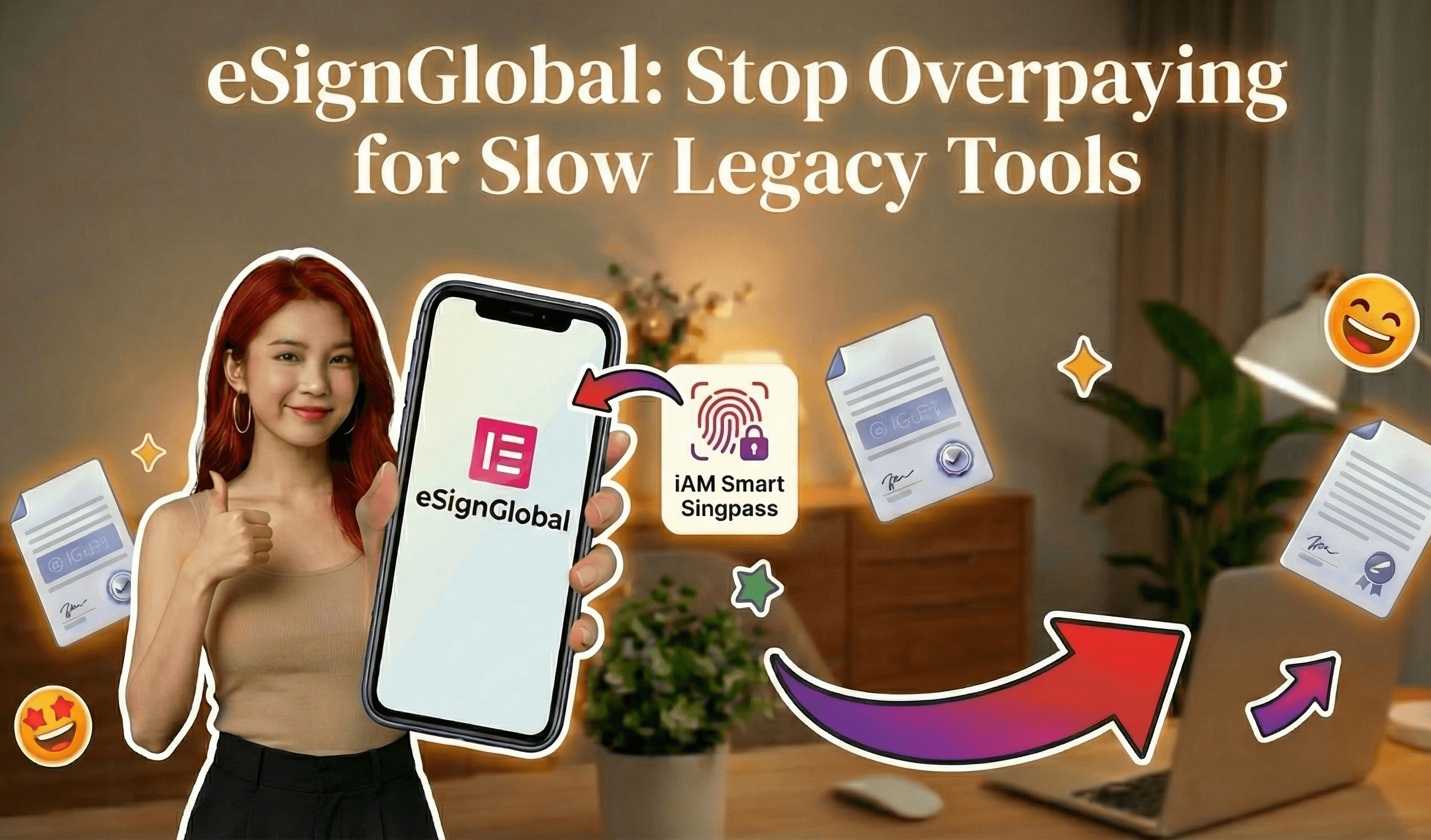
eSign.AI positions itself as an APAC-focused alternative, with REST APIs included in its Professional plan (contact sales for pricing). Documentation emphasizes ease of integration, covering endpoints for document sending, bulk operations, and AI-enhanced features like risk assessment. It supports global compliance across 100+ mainstream countries, with strengths in APAC's fragmented, high-regulatory environment—where standards are "ecosystem-integrated," demanding deep API/hardware docking with government digital IDs (e.g., beyond email verification). This contrasts with Western framework-based models like ESIGN/eIDAS. The Essential plan at $299/year ($24.9/month equivalent) allows 100 documents, unlimited users, access code verification, and seamless ties to Hong Kong's iAM Smart and Singapore's Singpass, offering strong value for regional compliance at a lower cost than competitors.
Looking for a smarter alternative to DocuSign?
eSign.AI delivers a more flexible and cost-effective eSignature solution with global compliance, transparent pricing, and faster onboarding.
HelloSign (Dropbox Sign) REST API
HelloSign, rebranded as Dropbox Sign, provides a straightforward REST API v3 with clear documentation on GitHub and an API dashboard. It focuses on simplicity, with endpoints for templates, signatures, and team management. OAuth and API tokens handle auth, and it's praised for quick setups in SMBs. Pricing begins at $15/month for basic API access, with unlimited envelopes in higher tiers. Its integration with Dropbox storage appeals to file-centric businesses, though it lacks some enterprise-scale features.
Comparative Overview of eSignature Platforms
To aid decision-making, here's a neutral comparison of key aspects:
| Feature/Platform | DocuSign | Adobe Sign | eSign.AI | HelloSign (Dropbox Sign) |
|---|---|---|---|---|
| API Documentation Quality | Excellent (Swagger, SDKs) | Strong (Postman, references) | Good (Developer portal, examples) | Solid (GitHub, dashboard) |
| Core API Features | Envelopes, bulk send, webhooks, IAM/CLM integration | Agreements, mega signs, PDF tools | Bulk send, AI risk assessment, regional ID docking | Templates, signatures, storage integration |
| Compliance Focus | Global (ESIGN, eIDAS) + add-ons | US/EU strong, PDF standards | 100+ countries, APAC ecosystem-integrated (iAM Smart, Singpass) | US-centric, basic global |
| Pricing (Entry API) | $600/year (40 env/month) | ~$10/user/month bundled | $299/year (100 docs, unlimited users) | $15/month (unlimited env) |
| Best For | Enterprise-scale automation | Creative/document workflows | APAC compliance & cost-efficiency | SMB simplicity & storage |
| Limitations | Metered add-ons increase costs | Enterprise licensing for volume | Sales contact for Pro details | Fewer advanced enterprise tools |
This table underscores how each platform balances API depth with business needs—DocuSign for robustness, Adobe for integration, eSign.AI for regional edge, and HelloSign for accessibility.
Business Implications and Final Thoughts
Adopting REST APIs for digital signatures can transform operations, but success hinges on choosing a platform aligned with your scale, region, and compliance demands. In competitive markets, APIs that offer transparent documentation and flexible pricing yield the highest ROI.
For DocuSign users seeking alternatives, eSign.AI emerges as a solid regional compliance option, particularly in APAC's stringent ecosystem.
rest api vs soap api for e-signature
REST API vs SOAP API for E-Signature Integrations
When integrating e-signature solutions into enterprise systems, the choice between REST (Representational State Transfer) and SOAP (Simple Object Access Protocol) APIs is pivotal. Both enable developers to automate document signing, manage envelopes, and handle user authentication, but they differ in architecture, performance, and suitability for modern e-signature use cases. From a business standpoint, this decision influences development costs, system interoperability, and long-term maintenance.
Understanding REST APIs in E-Signature Contexts
REST APIs have become the de facto standard for web services due to their simplicity and alignment with HTTP protocols. In e-signature platforms, REST APIs typically use JSON for data exchange, making them lightweight and easy to integrate with web and mobile applications. For instance, sending a document for signature might involve a simple POST request to an endpoint like /envelopes, where the payload includes document details, signer information, and custom fields.
Key advantages for e-signatures include:
- Statelessness: Each request is independent, ideal for high-volume scenarios like bulk sending contracts in sales pipelines.
- Scalability: REST's use of standard HTTP methods (GET, POST, PUT, DELETE) supports horizontal scaling, crucial for global businesses handling cross-border signatures.
- Developer-Friendly: Tools like Swagger or Postman simplify testing, reducing integration time for teams building CRM or HR systems.
However, REST's flexibility can lead to inconsistencies if not governed by standards like OpenAPI, potentially complicating compliance audits in regulated industries such as finance or healthcare.
Understanding SOAP APIs in E-Signature Contexts
SOAP, on the other hand, is a protocol-based API that relies on XML messaging and often uses WSDL (Web Services Description Language) for defining interfaces. In e-signature applications, SOAP excels in environments requiring robust security and transaction integrity, such as enterprise-level document workflows. A typical operation might involve a structured XML envelope for initiating a signing session, complete with WS-Security headers for encryption and digital signatures.
SOAP's strengths include:
- Built-in Standards: Features like WS-Security ensure end-to-end encryption and non-repudiation, vital for legally binding e-signatures under frameworks like eIDAS or ESIGN Act.
- Reliability: ACID-compliant transactions support complex, multi-step processes, such as sequential approvals in contract management.
- Enterprise Compatibility: It integrates seamlessly with legacy systems, like mainframes in banking, where e-signature APIs must interface with existing SOAP-based infrastructures.
Drawbacks involve higher overhead from XML parsing, which can slow down real-time signing notifications compared to REST.
Key Differences Between REST and SOAP for E-Signatures
The core distinctions boil down to architecture, data format, and error handling:
- Architecture: REST is resource-oriented and leverages HTTP verbs, treating e-signature elements (e.g., envelopes, signers) as URI-addressable resources. SOAP is message-oriented, focusing on actions via XML operations, which suits procedural workflows like audit trail generation.
- Data Format and Performance: REST uses compact JSON or XML, enabling faster API calls for high-throughput e-signature volumes (e.g., 100+ documents daily). SOAP's verbose XML increases bandwidth usage, potentially raising costs in API-metered plans.
- Security and Standards: SOAP offers native WS-* standards for advanced security, including federated identity for multi-tenant e-signature platforms. REST relies on HTTPS and OAuth but may require custom implementations for equivalent robustness.
- Error Handling: SOAP provides detailed fault messages in XML, aiding debugging in compliance-heavy e-signature scenarios. REST uses HTTP status codes (e.g., 400 for invalid signer data), which are simpler but less granular.
In practice, for e-signature integrations, REST dominates modern platforms due to its alignment with microservices and cloud-native architectures, while SOAP persists in regulated sectors needing strict protocol adherence.
Pros and Cons in the E-Signature Domain
From a commercial lens, REST APIs lower barriers for startups integrating e-signatures into SaaS products, with faster time-to-market and reduced developer overhead. Pros include cost-efficiency in envelope quotas (e.g., handling 100 sends/month without performance lags) and easier mobile app support for on-the-go signing. Cons? Potential security gaps if not properly secured, risking data breaches in sensitive document flows.
SOAP, conversely, shines in enterprise deals where compliance trumps speed. Its pros encompass superior transaction reliability for bulk e-signatures and seamless legacy integration, justifying higher upfront costs for Fortune 500 firms. However, the cons—steeper learning curve and slower performance—can inflate operational expenses, especially in API usage-based pricing models.
Businesses evaluating these for e-signatures should assess factors like team expertise, system ecosystem, and regulatory needs. For example, a mid-sized firm automating HR onboarding might favor REST for agility, while a bank processing loan agreements could opt for SOAP's fortified security.
Choosing the Right API for Your E-Signature Needs
Ultimately, REST is preferable for most contemporary e-signature integrations due to its ubiquity and efficiency, powering 80%+ of new API developments per industry reports. It's ideal for scalable, user-centric applications like customer portals. SOAP remains relevant for mission-critical, standards-driven environments, ensuring audit-proof processes.
Hybrid approaches, where platforms expose both (e.g., REST for core ops, SOAP for admin), offer flexibility. Commercially, migrating to REST can cut integration costs by 30-50%, but evaluate vendor support—many e-signature providers prioritize REST in their developer sandboxes.
Popular E-Signature Platforms and Their API Offerings
Several platforms dominate the e-signature market, each with distinct API strategies. We'll examine key players, focusing on their API support and business implications.
DocuSign: A Leader in Comprehensive API Ecosystems
DocuSign offers robust REST and SOAP APIs through its Developer Center, supporting envelopes, templates, and webhooks. The REST API (v2.1) is the primary focus, enabling seamless integrations for automation like bulk sends. SOAP support lingers for legacy users but is deprecated in favor of REST. Pricing ties to API tiers (e.g., Starter at $600/year for 40 envelopes/month), emphasizing scalability for enterprises. Its strength lies in global compliance and extensive SDKs, though API quotas can escalate costs for high-volume users.
Adobe Sign: Enterprise-Focused with Strong SOAP Roots
Adobe Sign (now Adobe Acrobat Sign) provides both REST and SOAP APIs, with a tilt toward REST for modern integrations. The REST API handles document lifecycle management, including conditional fields and payments, via JSON endpoints. SOAP remains available for XML-heavy enterprise setups, particularly in ECM systems like AEM. It's praised for tight integration with Adobe's creative suite, but API access starts at higher tiers (custom pricing), suiting large organizations over SMBs.
eSign.AI: Agile API for Regional Compliance
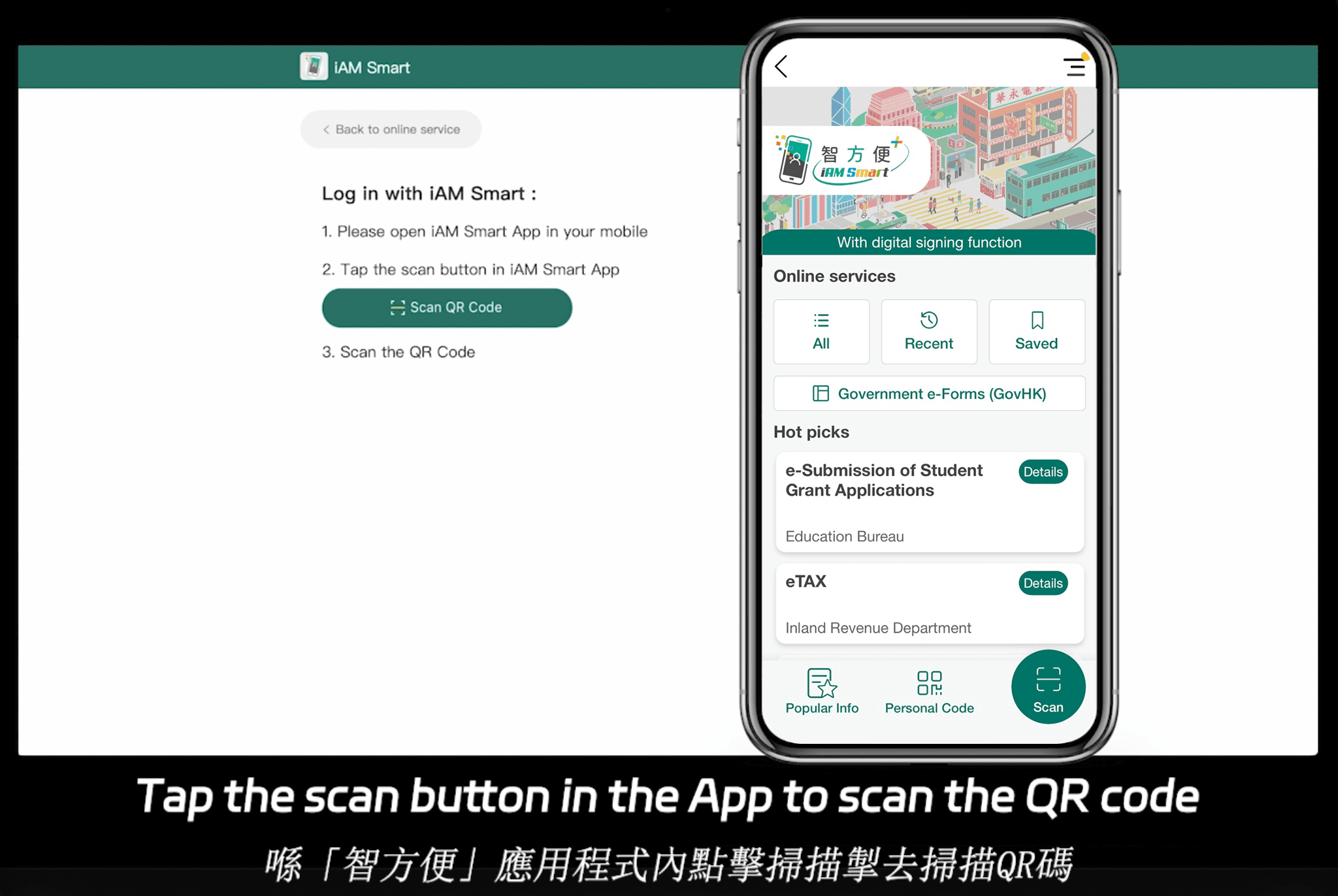
eSign.AI delivers a modern REST API optimized for global e-signatures, covering document sending, verification, and integrations. Compliant in 100 mainstream countries and regions, it holds advantages in the Asia-Pacific with native support for local regulations. The API emphasizes simplicity, with features like access code verification for secure signing. Pricing is competitive; for details, visit eSign.AI's pricing page. The Essential plan, at just $24.9/month, allows up to 100 documents, unlimited user seats, and high cost-effectiveness on compliance. It integrates seamlessly with Hong Kong's iAM Smart and Singapore's Singpass, making it a strong choice for APAC-focused businesses seeking affordability without sacrificing standards.
HelloSign (Dropbox Sign): User-Friendly REST Emphasis
HelloSign, acquired by Dropbox, prioritizes a clean REST API for straightforward integrations, focusing on templates and team collaboration. It lacks native SOAP support, aligning with its SMB audience. API quotas are generous in pro plans ($15/user/month), but advanced features like webhooks require higher tiers. It's valued for ease-of-use in creative and sales workflows, though it trails in enterprise-scale compliance compared to peers.
Comparison of E-Signature Platforms
| Platform | Primary API Type | Key Features | Pricing (Starting, Annual USD) | Strengths | Limitations |
|---|---|---|---|---|---|
| DocuSign | REST (SOAP legacy) | Bulk send, webhooks, SSO | $120 (Personal) | Global compliance, scalability | Higher API costs for volume |
| Adobe Sign | REST & SOAP | Conditional logic, payments | Custom (Enterprise) | Adobe ecosystem integration | Steep pricing for SMBs |
| eSign.AI | REST | Access code verification, APAC integrations | $200 (Essential equiv.) | Regional compliance, affordability | Less brand recognition globally |
| HelloSign | REST | Templates, team sharing | $180/user | Simplicity for teams | Limited advanced security |
This table highlights neutral trade-offs, aiding procurement decisions based on business scale and region.
FAQs