
'%3e%3cpath%20fill-rule='evenodd'%20clip-rule='evenodd'%20d='M6.99935%2012.8327C10.221%2012.8327%2012.8327%2010.221%2012.8327%206.99935C12.8327%203.77769%2010.221%201.16602%206.99935%201.16602C3.77769%201.16602%201.16602%203.77769%201.16602%206.99935C1.16602%2010.221%203.77769%2012.8327%206.99935%2012.8327Z'%20stroke='%23666666'%20stroke-linecap='round'%20stroke-linejoin='round'/%3e%3cpath%20d='M1.16602%207H12.8327'%20stroke='%23666666'%20stroke-linecap='round'%20stroke-linejoin='round'/%3e%3cpath%20fill-rule='evenodd'%20clip-rule='evenodd'%20d='M6.99935%2012.8327C8.28802%2012.8327%209.33268%2010.221%209.33268%206.99935C9.33268%203.77769%208.28802%201.16602%206.99935%201.16602C5.71068%201.16602%204.66602%203.77769%204.66602%206.99935C4.66602%2010.221%205.71068%2012.8327%206.99935%2012.8327Z'%20stroke='%23666666'%20stroke-linecap='round'%20stroke-linejoin='round'/%3e%3cpath%20d='M2.875%202.95898C3.93063%204.01461%205.38896%204.66754%206.99978%204.66754C8.61062%204.66754%2010.069%204.01461%2011.1246%202.95898'%20stroke='%23666666'%20stroke-linecap='round'%20stroke-linejoin='round'/%3e%3cpath%20d='M11.1246%2011.0425C10.069%209.98691%208.61062%209.33398%206.99978%209.33398C5.38896%209.33398%203.93063%209.98691%202.875%2011.0425'%20stroke='%23666666'%20stroke-linecap='round'%20stroke-linejoin='round'/%3e%3c/g%3e%3cdefs%3e%3cclipPath%20id='clip0_1267_9109'%3e%3crect%20width='14'%20height='14'%20fill='white'/%3e%3c/clipPath%3e%3c/defs%3e%3c/svg%3e)



Philippines · RA 8792 · E-Commerce Act
Electronic Signatures Are Legally Equivalent in the Philippines
The E-Commerce Act gives electronic signatures the same legal standing as handwritten ones. Validity depends on a reliable identification method.
Official legal baseline
Four legal pillars for electronic signing in the Philippines
Legal definition
An electronic signature is legally equivalent when a reliable method identifies the signatory and shows approval
Section 8 of the E-Commerce Act sets the conditions for legal equivalence. The identification method must be reliable and appropriate for the document and circumstances.
A method identifies the signatory and indicates approval
RA 8792 Section 8 requires a method that identifies the party and indicates that party's access to and approval of the electronic document.
The method is reliable and appropriate for the purpose
The identification method must be as reliable as appropriate for the purpose for which the electronic document was generated, in light of the circumstances.
Electronic documents and signatures are admissible evidence
The Rules on Electronic Evidence make electronic documents and signatures admissible in court, weighed by the reliability of their generation, storage, and transmission.
Some documents require notarization or a specific form
Documents that require notarization, certain civil-status acts, and transactions reserved by law for paper execution must be identified and isolated at classification.
Legal timeline
The framework is mature — execution decisions remain document-specific
The Philippines has recognized electronic signatures since 2000. A mature framework does not mean every document uses the same signing path.
E-Commerce Act (RA 8792) enacted
Established legal recognition of electronic documents and electronic signatures, with Section 8 setting the conditions for legal equivalence.
Rules on Electronic Evidence took effect
A.M. No. 01-7-01-SC governs the admissibility and evidential weight of electronic documents and signatures in Philippine courts.
Data Privacy Act (RA 10173)
Created the National Privacy Commission and set requirements for processing personal data, including data collected during signing.
Internet Transactions Act (RA 11967)
Strengthened the e-commerce framework for online transactions, reinforcing the role of electronic documents in digital commerce.
Not sure which signing route fits your documents?
Talk to an eSign.AI specialist about RA 8792 conditions, PNPKI certificates, and document classification in the Philippines.
eSign.AI product capabilities
eSign.AI runs the full signing workflow and evidence layer — from template to archive
eSign.AI gives legal, compliance, and operations teams the workflow and evidence layer to act on every signing decision with confidence — built to support admissibility under the Rules on Electronic Evidence.
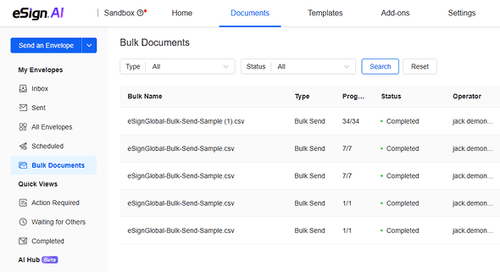
Bulk Send for high-volume signing
Send to 1,000+ recipients from a CSV with unique signing links and live Sent / Opened / Signed / Declined tracking — built for BPO onboarding and mass disclosures.

Drag-and-drop template management
Build reusable templates in a visual editor — drop in signature, seal, date, and text fields, map them to CSV or API variables, and share controlled template libraries across teams. Each signature is sealed with an X.509 certificate, SHA-256 hash, and RFC 3161 timestamp.
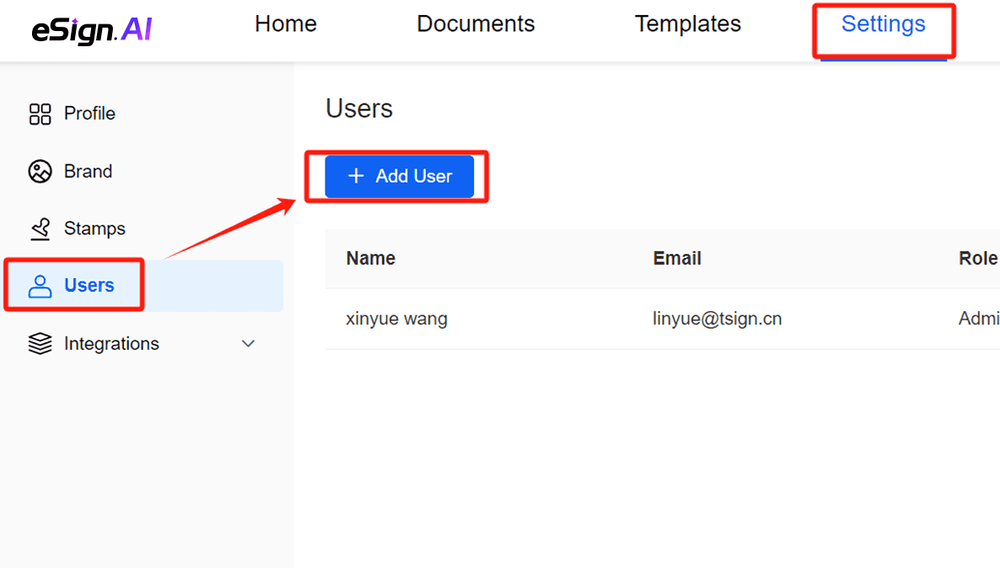
Court-ready evidence and team controls
Export signer identity, verification method, timestamps, IP and device logs, certificate chain, and signing events, with role-based access across HR, legal, and operations teams.
Deployment scenarios
Common governed signing scenarios for Philippine operations
Apply document-specific route rules and evidence retention across high-frequency signing touchpoints.
BPO and shared services
Employment contracts, onboarding, and policy acknowledgements run on reusable templates with role-based access across large, distributed workforces.
Banks, lending, and fintech
Loan agreements, account opening, and disclosures need signer identity verification and full evidence retention for regulatory review.
Insurance and policy administration
Policy issuance, endorsements, and claims documents are signed through configured identity routes with tamper-evident sealing.
System-triggered agreements
ERP, CRM, HR, and core platforms trigger signing via API. Evidence packages return to the originating system on completion.
Planning a Philippine signing workflow?
Get a configuration walkthrough covering identity verification, evidence retention, and archive return.
Customer stories
Customer stories
How global brands run compliant, cross-border electronic signing with eSign.AI.
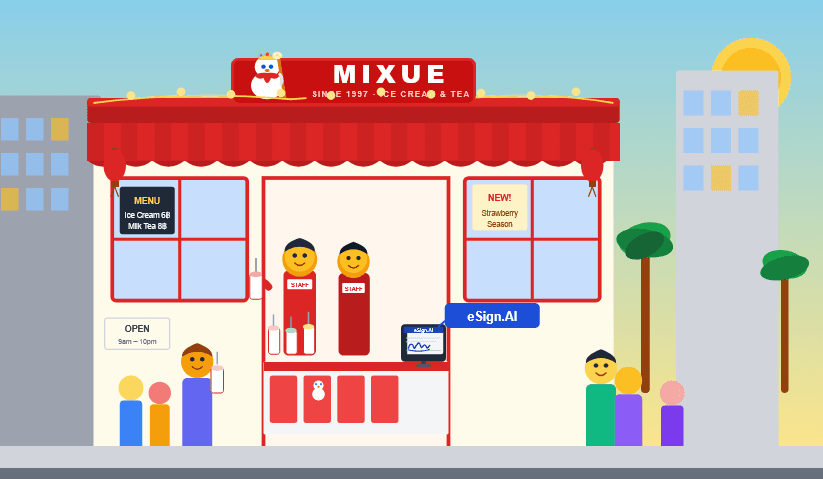
Mixue — global franchise expansion
eSign.AI helps Mixue standardize signing for franchise recruitment, procurement, and supply cooperation across multiple countries, improving the speed of its global operations.

Green Tea Group — international chain stores
eSign.AI helps Green Tea Group, an international chain restaurant brand, manage signing for its directly operated stores across multiple countries at lower cost.

Beyondsoft — Vietnam labor contract signing
eSign.AI helps Beyondsoft run compliant labor contract signing for its Vietnam workforce, connecting HR approval, employee signing, and archive into one closed loop.
FAQ
Common questions about electronic signatures in the Philippines
Philippines workflow review
Confirm the signing route before scaling your Philippine rollout
Bring your document types, signer roles, regulatory requirements, existing systems, and identity-verification needs into a Philippine signing workflow review. eSign.AI's team can walk through the configuration.


