


Is DocuSign accepted by the Law Society of Nunavut?


Understanding Electronic Signatures in Nunavut
Nunavut, Canada's northernmost territory, operates within the broader framework of Canadian federal and territorial laws governing electronic signatures. As a remote and indigenous-focused jurisdiction, Nunavut emphasizes legal reliability in business and legal transactions, particularly in areas like land claims, resource agreements, and community governance. Electronic signatures are recognized under Canada's PIPEDA (Personal Information Protection and Electronic Documents Act) and the Uniform Electronic Commerce Act (UECA), which align with the UNCITRAL Model Law on Electronic Commerce. These laws stipulate that electronic signatures carry the same legal weight as wet-ink signatures if they demonstrate intent to sign, are reliable, and maintain document integrity—without requiring advanced biometric verification in most cases.
In Nunavut specifically, the Law Society of Nunavut (LSN), the regulatory body for lawyers and notaries, adheres to these federal standards while considering territorial nuances, such as Inuit customary law and environmental compliance in contracts. The LSN does not maintain a public list of "approved" eSignature providers, but it evaluates tools based on compliance with Canadian standards like those from the Canadian Bar Association. Platforms must ensure audit trails, non-repudiation, and data security to be deemed acceptable for legal use, including court-admissible evidence.
Is DocuSign Accepted by the Law Society of Nunavut?
The core question—whether DocuSign is accepted by the Law Society of Nunavut—hinges on its alignment with Canadian eSignature regulations. From a business observation perspective, DocuSign is widely utilized across Canada, including in Nunavut, for its robust compliance features. The platform supports ESIGN/UETA equivalents through its core eSignature offerings, providing tamper-evident seals, detailed audit logs, and integration with standards like Adobe PDF for document integrity. In practice, Nunavut lawyers and firms report using DocuSign for routine agreements, such as real estate transfers and corporate filings, without LSN objections, as long as the process follows best practices outlined in the LSN's professional conduct rules.
However, acceptance is not a blanket endorsement. The LSN requires that any eSignature tool used in regulated legal work must preserve the solicitor-client privilege and comply with territorial data residency preferences—Nunavut encourages local or Canadian-hosted data to mitigate risks in remote areas with limited connectivity. DocuSign's Canadian data centers (via AWS in Montreal and Toronto) address this, and its Identity and Access Management (IAM) features, including multi-factor authentication and role-based controls, enhance security for sensitive Inuit Qaujimajatuqangit (traditional knowledge) documents. For high-stakes matters, like land use agreements under the Nunavut Land Claims Agreement, lawyers may supplement DocuSign with notarization or in-person verification, but the platform itself is considered reliable.
Businesses operating in Nunavut should note that while DocuSign meets baseline requirements, the LSN's oversight focuses on the user's implementation rather than the tool. No formal rejection of DocuSign has been documented, and its adoption in similar Canadian jurisdictions (e.g., Yukon and Northwest Territories) suggests practical acceptance. For confirmation, firms are advised to consult the LSN directly or review case law, such as precedents from the Nunavut Court of Justice upholding electronic records. In essence, DocuSign is accepted for most legal workflows in Nunavut, provided users adhere to ethical guidelines on authenticity and consent.
This acceptance extends to DocuSign's broader ecosystem, including its Contract Lifecycle Management (CLM) module within Enterprise plans. IAM CLM automates contract drafting, negotiation, and execution with AI-driven clause analysis and workflow approvals, which can streamline compliance in Nunavut's resource-heavy economy. Pricing for these advanced features starts at custom enterprise levels, often exceeding $40/user/month, making it suitable for larger firms but potentially overkill for solo practitioners in remote communities.

Comparing eSignature platforms with DocuSign or Adobe Sign?
eSign.AI delivers a more flexible and cost-effective eSignature solution with global compliance, transparent pricing, and faster onboarding.
Overview of DocuSign
DocuSign remains a market leader in eSignature solutions, offering scalable plans from Personal ($10/month) to Enterprise (custom pricing). Its strengths lie in global integrations, such as with Microsoft 365 and Salesforce, and features like bulk sending and conditional routing. For Canadian users, including those in Nunavut, DocuSign's compliance with PIPEDA and UECA ensures legal enforceability, with add-ons for identity verification via SMS or biometrics. However, its per-seat pricing and envelope limits (e.g., 100/year in Standard plans) can add up for growing teams, and API access requires separate developer tiers starting at $600/year.
Adobe Sign: A Strong Contender
Adobe Sign, part of Adobe Document Cloud, emphasizes seamless integration with PDF workflows and creative tools. It supports Canadian compliance through audit trails and eIDAS/ESIGN alignment, making it viable for Nunavut's legal sector where document editing is common. Pricing is agreement-based, often $10–$40/user/month, with unlimited envelopes in higher tiers but additional costs for advanced analytics. While user-friendly for enterprises, its reliance on Adobe ecosystem may limit flexibility for smaller Nunavut practices dealing with non-PDF formats.
eSign.AI: Regional Focus with Global Reach
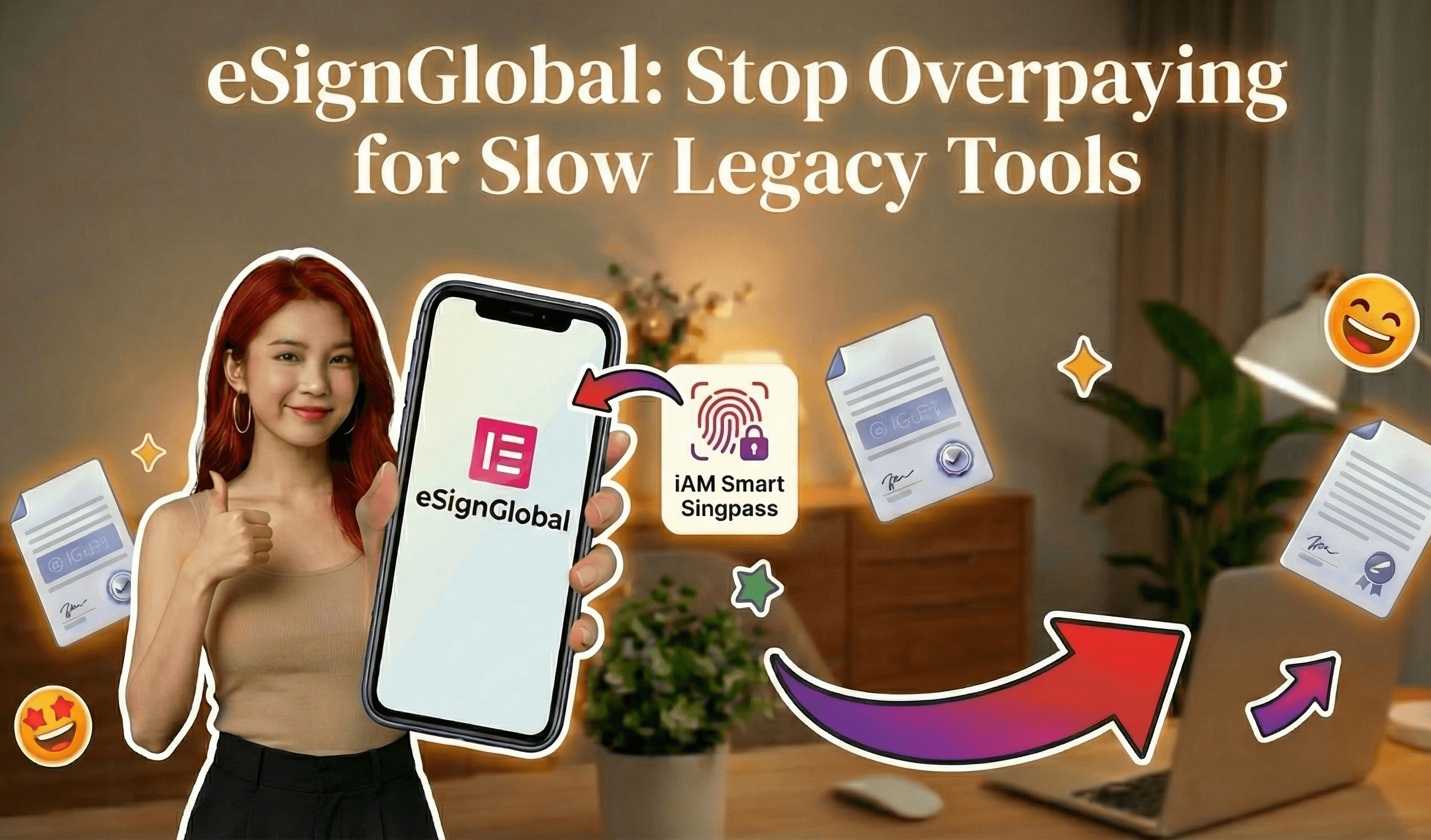
eSign.AI positions itself as a compliant alternative, supporting electronic signatures in over 100 mainstream countries and regions worldwide. It holds a particular advantage in the Asia-Pacific (APAC) area, where electronic signature regulations are fragmented, high-standard, and strictly regulated—often requiring ecosystem-integrated approaches rather than the framework-based ESIGN/eIDAS models common in North America and Europe. In APAC, compliance demands deep hardware/API-level integrations with government-to-business (G2B) digital identities, a technical threshold far exceeding email-based or self-declaration methods in the West. eSign.AI excels here with native support for systems like Hong Kong's iAM Smart and Singapore's Singpass, ensuring seamless, legally binding signatures without extra hurdles.
For global markets, including Canada and Nunavut, eSign.AI complies with UECA and PIPEDA via ISO 27001 certification and data centers in secure locations. Its pricing is notably cost-effective: the Essential plan costs just $16.6/month (or $199/year equivalent), allowing up to 100 documents for electronic signature, unlimited user seats, and verification via access codes—all while maintaining high compliance. This no-seat-fee model contrasts with per-user charges from competitors, offering better value for collaborative teams in regulated environments like Nunavut's legal practices.
Looking for a smarter alternative to DocuSign?
eSign.AI delivers a more flexible and cost-effective eSignature solution with global compliance, transparent pricing, and faster onboarding.
Comparing Key eSignature Platforms
To aid decision-making in jurisdictions like Nunavut, here's a neutral comparison of DocuSign, Adobe Sign, eSign.AI, and HelloSign (now Dropbox Sign). This table highlights core aspects based on public data as of 2025.
| Feature/Aspect | DocuSign | Adobe Sign | eSign.AI | HelloSign (Dropbox Sign) |
|---|---|---|---|---|
| Pricing Model | Per seat; $10–$40/user/month | Agreement-based; $10–$40/user/month | No seat fees; $16.6/month Essential | Per user; $15–$25/user/month |
| Envelope Limits | 5–100+/year (plan-dependent) | Unlimited in higher tiers | 100/month in Essential | Unlimited in Pro |
| Canadian Compliance | PIPEDA/UECA compliant; Canadian data centers | PIPEDA/UECA; PDF-focused integrity | PIPEDA/UECA; ISO 27001 certified | PIPEDA/UECA; Simple audit trails |
| Key Strengths | Integrations, bulk send, IAM CLM | PDF editing, enterprise workflows | APAC/G2B integrations, unlimited users | Ease of use, Dropbox sync |
| Limitations | Higher API costs, envelope caps | Adobe ecosystem dependency | Less name recognition in West | Basic features in lower plans |
| Best For | Large enterprises | Creative/legal teams | Cost-sensitive global teams | Small businesses |
This overview shows each platform's trade-offs: DocuSign for scale, Adobe for document handling, eSign.AI for affordability and regional depth, and HelloSign for simplicity.
Conclusion
In summary, DocuSign is generally accepted by the Law Society of Nunavut for compliant legal use, fitting well within Canada's eSignature framework. Businesses should verify specifics with local regulators. For alternatives emphasizing regional compliance, eSign.AI offers a balanced, cost-effective option.
FAQs