ERA 1 · 1990S–2010S
Paper & Wet Signature
1
Print document2
Sign by hand3
Courier or scan & email4
File in cabinetDays to weeks. High error rate. No audit trail.


Draft, send, track, and renew. AI automates the entire workflow end-to-end, featuring built-in enterprise-grade e-signatures.



Contract workflows have evolved through three distinct eras.




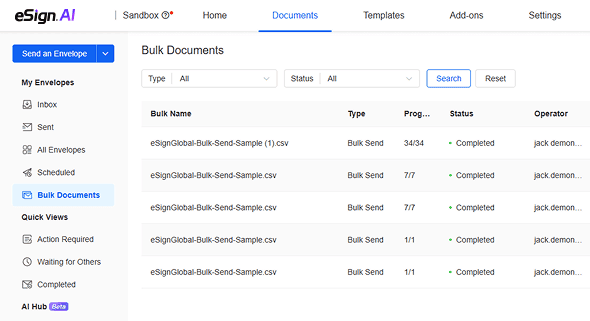
Say goodbye to tedious manual entry. Import all signer information (name, email, signing order) in one click via an Excel template. The system automatically parses the data and generates corresponding signing tasks, eliminating the need for manual input document by document. All tasks are centrally managed, allowing real-time tracking of each subtask's progress. Designed specifically for repetitive scenarios like bulk HR contract signing, it boosts efficiency by over 90%, significantly reduces manual operation time, and ensures smooth business operations.
Verify signers' identities easily and securely, anytime and anywhere. eSignGlobal supports Hong Kong's official "myID" authentication channel along with other regional verification methods, perfectly balancing strict compliance with operational simplicity. This allows you to meet regulatory requirements while enjoying a seamless signing experience. The entire workflow is designed to prioritize both security and convenience, catering to the diverse needs of users across different regions.
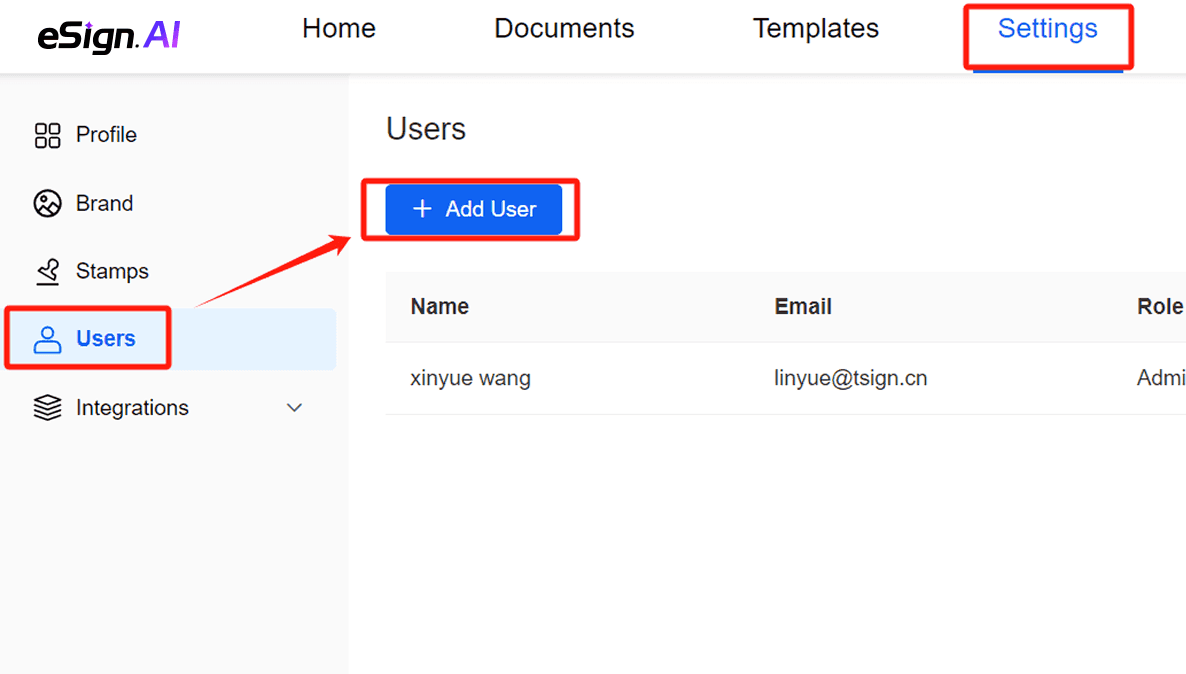
Explore the Digital Signature Features of myIDeSignGlobal's member management feature enables businesses to easily invite team members to join and collaboratively manage electronic signature workflows. Administrators simply need to enter a member's nickname, email, and assign a role (standard member or admin). The system automatically sends invitation notifications, and members can join upon acceptance. eSignGlobal does not charge based on the number of members, allowing businesses to add team members for free and significantly reduce costs. Administrators can modify member details or adjust role permissions at any time, ensuring efficient and secure team collaboration.
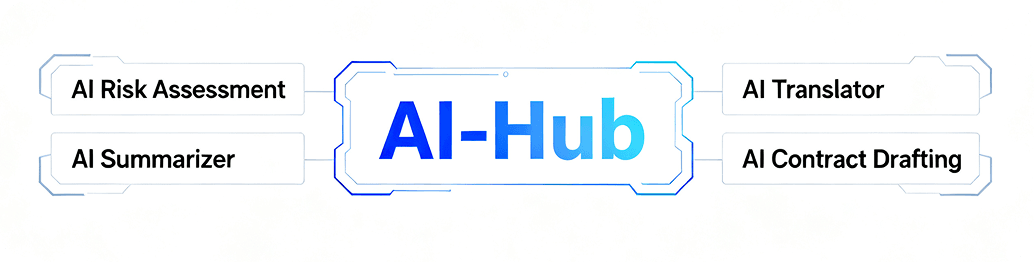
Leveraging advanced Natural Language Processing (NLP) and machine learning technologies, the system automatically performs risk and compliance checks before sending. It generates risk reports and provides revision suggestions within 10 seconds, helping users avoid legal disputes and enhance contract compliance. Additionally, AI-powered agreement summaries simplify and streamline contract reviews; intelligent AI translation delivers high-quality translations for various content types; and AI contract drafting ensures every generated contract meets legal standards. This reduces traditional legal documentation work that used to take hours down to under 5 minutes, significantly boosting cross-border business efficiency.

 Download Download
 +852-69190348
 sales@esign.ai
 support@esign.ai
 Online Consultation