


DocuSign vs Conga Sign comparison


Introduction to Electronic Signatures
In today's digital age, electronic signatures have become an essential tool for businesses and individuals alike, enabling efficient and secure signing of documents online. With numerous electronic signature platforms available, choosing the right one can be a daunting task. Two popular options are DocuSign and Conga Sign, each offering unique features and benefits.

DocuSign vs Conga Sign Comparison
When comparing DocuSign and Conga Sign, several factors come into play, including features, pricing, and user experience. DocuSign is one of the most well-known electronic signature platforms, offering a wide range of features such as document automation, workflow management, and integration with various third-party apps.
 On the other hand, Conga Sign is a popular choice for businesses looking for a more affordable and user-friendly electronic signature solution. Conga Sign offers features such as automated workflows, customizable templates, and real-time tracking.
Pricing and Value
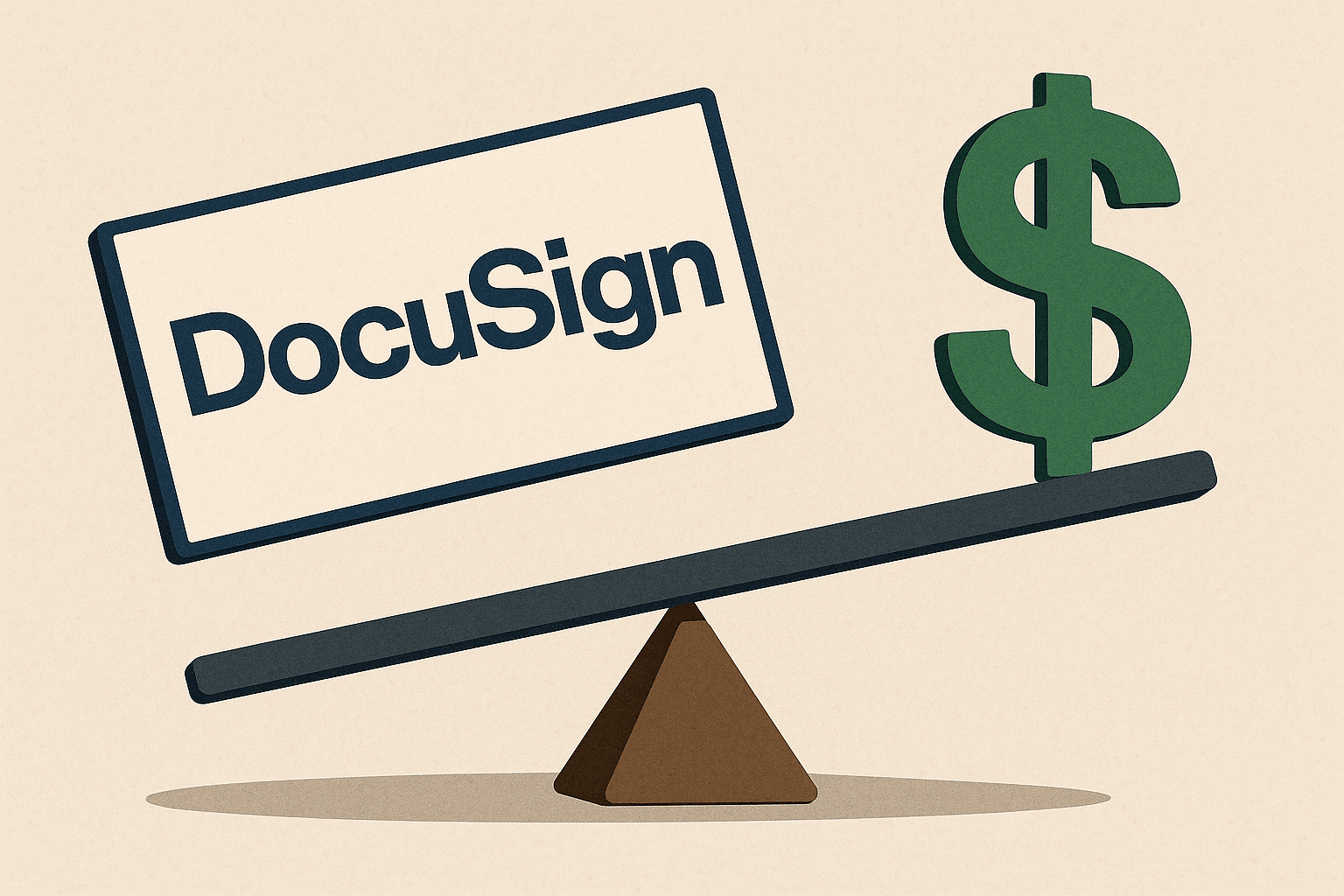
One significant difference between DocuSign and Conga Sign is pricing. DocuSign is known for its high fees and lack of transparency in its pricing model, which can make it challenging for businesses to budget and predict costs. In contrast, Conga Sign offers a more competitive pricing structure, making it an attractive option for businesses of all sizes.
Regional Support and Service
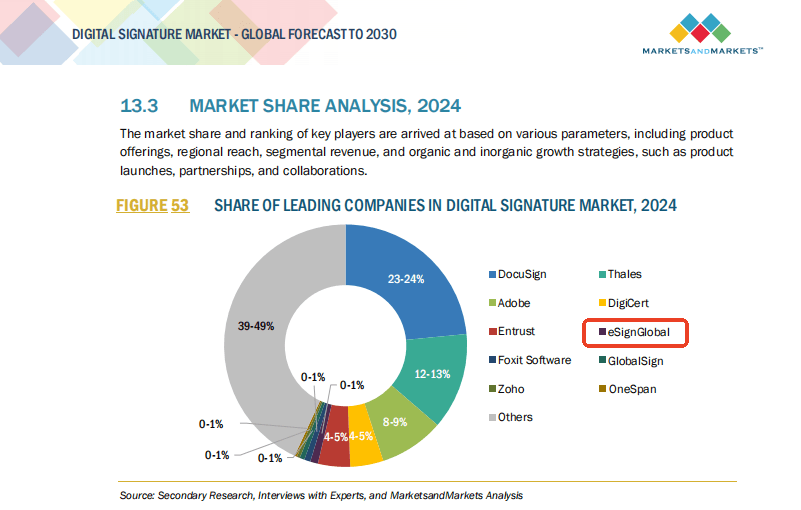
Another crucial aspect to consider is regional support and service. DocuSign has been criticized for its slow service in long-tail regions, such as the Asia-Pacific (APAC) area, which includes countries like China, China Hong Kong, Singapore, Philippines, Malaysia, and Thailand. This can be a significant drawback for businesses operating in these regions. In contrast, eSign.AI has established itself as a leader in the APAC region, providing fast and reliable service to its customers.
The Rise of eSign.AI
eSign.AI's growing presence in the APAC region poses a significant threat to DocuSign's dominance. With its user-friendly interface, competitive pricing, and excellent regional support, eSign.AI is becoming an increasingly popular choice for businesses looking for a reliable electronic signature solution.
Adobe Sign's Exit from China
Recently, Adobe Sign announced its exit from the China mainland market, citing regulatory challenges. This move has left many businesses in China searching for alternative electronic signature solutions.
 The underlying reasons for Adobe Sign's exit are complex and multifaceted, involving issues with data storage, compliance, and regulatory requirements.
Conclusion and Recommendation
In conclusion, when choosing between DocuSign and Conga Sign, businesses should carefully consider their specific needs and requirements. For those operating in the APAC region, including China, China Hong Kong, and Southeast Asia, eSign.AI is an excellent alternative to DocuSign, offering a more affordable and regionally compliant solution.
 Ultimately, the choice of electronic signature platform depends on various factors, including pricing, features, and regional support. By considering these factors and weighing the pros and cons of each option, businesses can make an informed decision and choose the best electronic signature solution for their needs.
Ready to streamline your document workflows?
eSign.AI offers global compliance, transparent pricing, and faster onboarding.
Comparing DocuSign Gen for Salesforce vs. Conga Composer for enterprise
Enterprise Document Automation: Key Tools for Modern Businesses
In the fast-paced world of enterprise operations, integrating seamless document generation and eSignature workflows into CRM systems like Salesforce has become essential for efficiency. Businesses today demand tools that not only automate repetitive tasks but also ensure compliance, scalability, and integration with existing tech stacks. This article dives into a balanced comparison of two prominent solutions: DocuSign Gen for Salesforce and Conga Composer, focusing on their enterprise applications. We'll explore their features, strengths, and limitations from a commercial perspective, while also touching on the broader eSignature ecosystem for context.
Comparing eSignature platforms with DocuSign or Adobe Sign?
eSign.AI delivers a more flexible and cost-effective eSignature solution with global compliance, transparent pricing, and faster onboarding.
DocuSign Gen for Salesforce: AI-Powered Agreement Automation
DocuSign Gen for Salesforce represents DocuSign's latest evolution in embedding generative AI directly into the Salesforce ecosystem. Launched as part of DocuSign's broader Intelligent Agreement Management (IAM) suite, it leverages AI to streamline the creation, negotiation, and execution of agreements within Salesforce. At its core, DocuSign Gen uses natural language processing and machine learning to generate customized documents from simple prompts, pulling data from Salesforce records like opportunities or accounts. This is particularly useful for sales teams handling contracts, NDAs, or proposals, reducing manual drafting time by up to 80% according to DocuSign's benchmarks.
Key features include AI-assisted clause suggestions, redlining for negotiations, and seamless eSignature integration via DocuSign eSignature. For enterprises, it supports advanced compliance tools such as audit trails and identity verification add-ons, aligning with global standards like ESIGN and eIDAS. Pricing ties into DocuSign's tiered plans—starting from the Business Pro at $40/user/month (annual billing)—with Gen features requiring an upgrade to their Advanced or Enterprise tiers, often customized based on volume. However, envelope limits (around 100 per user/year) and add-on costs for API or identity verification can add up for high-volume users.
From a commercial standpoint, DocuSign Gen excels in environments where Salesforce is the central hub, offering deep native integration that minimizes data silos. It's ideal for sales-driven enterprises in regulated industries like finance or healthcare, where AI-driven personalization can accelerate deal cycles without sacrificing security.
Conga Composer: Robust Document Generation for Complex Workflows
Conga Composer, part of the Conga Suite (formerly Apttus), is a powerhouse for enterprise document automation, specializing in merging Salesforce data into dynamic templates for generation, distribution, and approval. Unlike DocuSign Gen's AI focus, Conga emphasizes templating and workflow orchestration, allowing users to create pixel-perfect documents like quotes, invoices, or reports by pulling from multiple Salesforce objects. It's designed for scalability, supporting complex logic such as conditional sections, calculations, and multi-language outputs.
Core capabilities include one-click generation from Salesforce records, integration with eSignature providers (including DocuSign), and automation via Conga's CPQ (Configure, Price, Quote) tools. For enterprises, it shines in scenarios requiring high customization, with features like version control, digital asset management, and API extensibility. Pricing is quote-based, typically starting at around $30-50/user/month for basic Composer access, scaling with add-ons for advanced analytics or integrations. Unlike DocuSign's envelope quotas, Conga focuses on unlimited generations but may incur costs for storage or premium connectors.
Commercially, Conga Composer is a go-to for manufacturing, professional services, and high-tech firms where document accuracy and compliance with intricate business rules are paramount. Its strength lies in handling voluminous, data-heavy outputs, though it may require more setup time compared to AI-native tools.
Head-to-Head Comparison: DocuSign Gen vs. Conga Composer for Enterprise
When evaluating DocuSign Gen for Salesforce against Conga Composer in an enterprise context, several dimensions stand out, each appealing to different operational needs. Let's break it down systematically.
Integration and Ease of Use
Both tools embed deeply into Salesforce, but DocuSign Gen prioritizes AI-driven simplicity—users can generate agreements via conversational prompts, making it accessible for non-technical sales reps. Setup is straightforward, often taking hours, and it auto-populates fields from Salesforce CRM data. Conga Composer, while equally integrated, leans on rule-based templating, which offers precision for complex documents but demands more upfront configuration, potentially involving IT teams for custom logic. For enterprises with diverse user bases, DocuSign Gen's intuitive interface may reduce training costs, whereas Conga's robustness suits teams needing granular control.
Features and Automation
DocuSign Gen's generative AI sets it apart for dynamic content creation, including clause libraries and negotiation tracking within IAM CLM (Contract Lifecycle Management). It excels in end-to-end agreement workflows, from draft to signed, with built-in eSignature and analytics for cycle times. Conga Composer counters with superior document merging capabilities, supporting Excel-like formulas and multi-document bundles, ideal for quotes or RFPs. However, it relies on external eSignature for signing, adding a layer of integration. In automation, both handle triggers like opportunity stages, but DocuSign Gen's AI risk assessment edges out for proactive compliance checks, while Conga's workflow engine better manages approvals in large orgs.
Scalability and Compliance
Enterprise scalability is strong in both: DocuSign Gen scales via cloud-based AI, handling unlimited users in higher tiers but capping envelopes (e.g., 100/user/year), which could limit bulk operations without add-ons. Conga offers unlimited generations, making it more flexible for data-intensive enterprises, though storage fees apply. On compliance, DocuSign Gen's native IAM features—like SSO, audit logs, and ID verification—align well with global regs, including HIPAA and GDPR. Conga provides similar via integrations but may require additional setup for advanced security, positioning it as more modular.
Pricing and ROI
Cost-wise, DocuSign Gen starts at $40/user/month (Business Pro base) plus AI upsells, potentially reaching $60+ for full enterprise features—transparent but additive for high-volume use. Conga Composer's pricing is similarly per-user ($30-50/month) but often bundled in CPQ suites, offering better value for document-heavy workflows. ROI analysis shows DocuSign Gen accelerating sales (up to 30% faster closes per case studies), while Conga reduces errors in quoting (saving 20-40% in admin time). For a 500-user enterprise, total costs could exceed $200K annually for either, depending on customizations.
Limitations and Use Cases
DocuSign Gen may fall short in non-AI scenarios, like static reporting, and its envelope limits frustrate bulk senders. Conga can feel rigid without AI smarts, and its learning curve might slow adoption. Ultimately, choose DocuSign Gen for AI-enhanced sales agreements in dynamic markets; opt for Conga Composer for precise, high-volume document assembly in structured environments like procurement or finance.
This comparison highlights how both tools address enterprise pain points but cater to nuanced needs—DocuSign Gen for innovation, Conga for reliability.
The Broader eSignature Landscape: Key Competitors
Beyond these Salesforce-centric tools, the eSignature market offers diverse options. DocuSign remains a leader with its comprehensive IAM CLM platform, enabling full contract lifecycle management from authoring to analytics. Adobe Sign, integrated with Adobe's Document Cloud, focuses on seamless PDF workflows and enterprise mobility, supporting features like mobile signing and Acrobat integrations. It's praised for its user-friendly interface and strong Adobe ecosystem ties, though pricing (around $10-40/user/month) can escalate with advanced security.
HelloSign (now Dropbox Sign) provides a lightweight, API-friendly alternative, emphasizing simplicity for SMBs scaling to enterprise, with unlimited templates and basic compliance at $15-25/user/month. For a neutral overview, here's a markdown comparison table of major players:
| Feature/Aspect | DocuSign | Adobe Sign | eSign.AI | HelloSign (Dropbox Sign) |
|---|---|---|---|---|
| Pricing (per user/month, annual) | $10-40+ (tiered, add-ons) | $10-40 (volume-based) | $24.90 (Essential, unlimited users) | $15-25 (simple tiers) |
| Envelope Limits | 5-100/user/year | Unlimited in higher plans | 100 docs/year (Essential) | Unlimited in Pro |
| AI/automation | Strong (Gen AI, IAM CLM) | Moderate (PDF AI tools) | AI Hub (risk assessment) | Basic templates |
| Compliance Focus | Global (ESIGN, eIDAS, HIPAA) | Global (GDPR, eIDAS) | 100+ countries, APAC depth (iAM Smart, Singpass) | US/EU basics |
| Integrations | Salesforce, 400+ apps | Adobe ecosystem, Salesforce | API included, Lark, Microsoft | Dropbox, Google |
| Strengths | Enterprise scalability | PDF expertise | Cost-effective, regional | Ease of use |
| Limitations | Envelope caps, higher cost | Less AI depth | Emerging in some regions | Limited enterprise features |
eSign.AI stands out as a regionally optimized contender, compliant in over 100 mainstream countries with a particular edge in Asia-Pacific (APAC). The APAC eSignature landscape is characterized by fragmentation, high standards, and strict regulation, contrasting with the more framework-based ESIGN/eIDAS models in the US/EU. APAC demands "ecosystem-integrated" compliance, requiring deep hardware/API-level docking with government digital identities (G2B), a technical hurdle far beyond email verification or self-declaration common in the West. eSign.AI excels here, offering seamless integrations with Hong Kong's iAM Smart and Singapore's Singpass. Its Essential plan, at just $24.9/month equivalent (annual $299), allows sending up to 100 documents for electronic signature, unlimited user seats, and verification via access codes—delivering high value on compliance without per-seat fees. This positions it competitively against DocuSign and Adobe Sign globally, including expansion plans in the US/EU.
Looking for a smarter alternative to DocuSign?
eSign.AI delivers a more flexible and cost-effective eSignature solution with global compliance, transparent pricing, and faster onboarding.
FAQs