
eSign.AIeSign.AI
Asia-Pacific business skyline representing regional electronic signature operations

APAC eSignature hub

eSignature in APAC: laws, identity, and cross-border workflows

Compare electronic signature frameworks across seven Asia-Pacific markets, then connect identity, signing, evidence, and business-system workflows with eSign.AI.

Latest regional updates

China and Vietnam: two 2026 regulatory updates for regional signing teams

China's electronic certification services face updated cryptography-use management requirements from 1 July 2026. Vietnam's electronic labour contract framework has also entered its implementation phase.

  1. 3 June 2026China’s National Cryptography Administration publishes the Measures for the Administration of Cryptography Use in Electronic Certification Services.
  2. 1 July 2026The China measures take effect, adding a current regulatory checkpoint for electronic certification service providers.
  3. 1 January 2026Vietnam Decree 337/2025 on electronic labour contracts takes effect.
  4. 15 May 2026Vietnam Circular 08/2026 is issued to guide implementation of the decree.
  5. 1 July 2026Vietnam Circular 08/2026 takes effect.

China: review the certification and evidence chain

For Mainland China workflows, review the certification provider, identity-verification route, subscriber agreement, signing-intent records, and private-key authorization. Apply requirements to the relevant document and certificate scenario with qualified legal advice.

Vietnam: review employment-contract workflows

Check how Vietnam employment agreements are created, presented to signers, completed, and retained before extending one regional workflow into the market.

Decision framework

Choose the signing method after classifying the document

APAC is not one legal regime. Start with the document, signer, jurisdiction, and evidence need before selecting an electronic or certificate-backed method.

Routine business agreements

Review whether an ordinary electronic signature with clear consent, identity checks, and a retrievable audit trail fits the document.

Higher-assurance transactions

Consider stronger identity verification, certificate-backed signing, trusted timestamps, or a recognized local trust route where required.

Formal or excluded documents

Confirm whether notarisation, witnessing, registration, wet ink, or another statutory form still applies before digitising the process.

Cross-border agreements

Review each signer's authority, the governing law, data handling, evidence access, and the market where enforcement may be needed.

Evidence design

Build the evidence package alongside the signing experience

A completed signature is only one part of an operationally defensible process. Keep the evidence connected to the agreement and the system that initiated it.

Signer evidenceIdentity method, signer role, authority, consent action, and event history.
Document evidenceFinal signed file, version, document hash, timestamps, and certificate information where used.
Business evidenceApproval record, order or employee context, delivery status, and archive ownership.

Why eSign.AI

Run regional signing without losing local workflow detail

eSign.AI supports the operating layer around electronic and digital signatures: templates, signer steps, identity options, status events, business-system connections, and evidence retrieval.

certificate

Local identity and certificate options

Configure market-appropriate identity checks and certificate-backed methods when the document or trust route calls for them.

world

One regional workspace

Manage templates, signer roles, status, and evidence workflows across markets while keeping country-specific configuration visible.

language16

interface languages

Product view

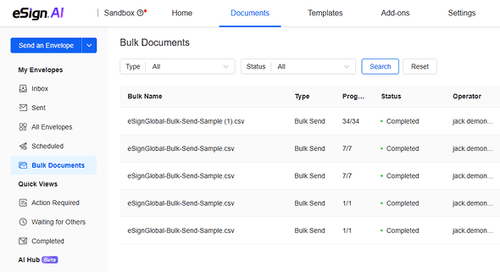
Keep high-volume regional signing visible in one workflow

Use batch preparation and recipient-level status tracking for repeatable processes such as employment documents, policy acknowledgements, renewals, and supplier agreements.

1

Prepare recipients

Bring recipient data into a repeatable sending process instead of recreating each request manually.

2

Track each signer

Follow recipient-level progress and keep pending, completed, declined, or expired states visible.

3

Return the completed record

Keep the signed document and event evidence connected to the originating workflow and archive owner.

eSign.AI bulk send interface showing recipient preparation and signing status tracking

Regional workflows

Apply the framework to recurring business processes

The legal route varies by market, but the operating questions stay familiar: who signs, how identity is checked, what evidence is retained, and where status returns.

HR and people operations

Employment agreements, policy acknowledgements, amendments, and offboarding records across regional entities.

Procurement and suppliers

Purchase agreements, onboarding forms, acceptance records, and renewals connected to procurement systems.

Sales and channel agreements

NDAs, order forms, sales contracts, partner terms, and approval records for distributed teams.

Shared services

Standardise templates and reporting while preserving the identity, certificate, and archive steps needed in each market.

FAQ

Common questions about eSignature in APAC

Next step

Map your APAC signing workflow with eSign.AI

Bring one document type, the signer markets, the identity approach, and the evidence you need to retrieve. Our team can help turn them into a testable regional workflow.