


sending limits on free docusign


Understanding Sending Limits in Free DocuSign Plans
Electronic signature platforms like DocuSign have become essential tools for businesses streamlining contract workflows, but users often seek cost-effective entry points. When exploring "free" options, it's crucial to clarify that DocuSign does not offer a perpetual free tier for unlimited use. Instead, it provides a 30-day free trial, which imposes specific sending limits to encourage upgrading to paid plans. This structure aligns with industry practices, balancing accessibility for new users while protecting revenue streams.
From a business perspective, these limits serve as a gateway to evaluate core features without long-term commitment. During the trial, users typically get access to the Personal plan's capabilities, including up to 5 envelopes per month. An "envelope" in DocuSign terminology refers to a single transaction that can contain multiple documents and involve several signers. For instance, sending a contract to three parties counts as one envelope, but exceeding the 5-envelope cap halts further sends until the trial ends or you subscribe.
This 5-envelope restriction is designed for light testing, such as drafting a few agreements or integrating with tools like Google Drive. Businesses observing this model note that it's sufficient for solo professionals or small teams prototyping workflows, but it quickly becomes inadequate for ongoing operations. Overuse during the trial can lead to prompts for payment, emphasizing DocuSign's focus on converting trial users—reportedly achieving high conversion rates through seamless onboarding.
In practice, the free trial's limits reset monthly, but the overall 30-day window means users must plan sends carefully. For example, if you're a freelancer testing lease agreements, 5 envelopes might cover initial demos, but scaling to client volumes requires the $10/month Personal plan for continued access at the same limit. This tiered approach reflects broader market dynamics, where free access builds awareness but paid upgrades unlock scalability.
Regional variations can influence these limits indirectly through compliance needs. In the United States, governed by the ESIGN Act of 2000 and UETA, electronic signatures carry the same legal weight as wet-ink ones, provided they meet intent and consent standards. DocuSign's trial complies fully, ensuring trial envelopes are audit-ready. Similarly, in the European Union, under eIDAS regulations, basic electronic signatures (like those in the trial) are valid for low-risk transactions, though advanced or qualified signatures may require paid add-ons for higher assurance. In Asia-Pacific regions, such as Singapore's Electronic Transactions Act or Hong Kong's Electronic Transactions Ordinance, DocuSign supports compliant signing, but free limits remain uniform globally, with potential add-on costs for local verifications like SMS delivery.
Business analysts view these constraints as a strategic nudge toward paid plans, where envelope quotas scale with investment. For high-volume users, exceeding free limits early signals the need for Standard ($25/user/month) or higher, offering 100 envelopes annually per user. This model promotes efficient resource use, reducing spam risks while fostering genuine adoption.

Navigating DocuSign's Paid Tiers Beyond Free Limits
Once the free trial's 5-envelope cap is hit, DocuSign's pricing escalates to accommodate growing needs. The Personal plan, at $120/year, maintains the 5 envelopes/month limit but adds template reuse and integrations for occasional users. Standard jumps to $300/user/year with up to 100 envelopes/user/year, enabling team collaboration and comments. Business Pro, at $480/user/year, includes advanced features like bulk sends and payments, still capped at similar envelope volumes but with automation allowances.
For API-driven businesses, Developer plans start at $600/year (Starter) with 40 envelopes/month, scaling to custom Enterprise options. Add-ons like SMS delivery or identity verification incur per-use fees, potentially inflating costs for global teams. In APAC, challenges like data residency and latency can compound expenses, making free trials a low-risk entry but paid scalability a key evaluation point.
From a commercial standpoint, DocuSign's limits encourage precise usage forecasting. Companies report that while the free trial suffices for proof-of-concept, 70-80% upgrade within the period, drawn by robust compliance and ecosystem integrations.
Adobe Sign: A Competitor's Approach to Free Limits
Adobe Sign, integrated within Adobe's ecosystem, offers a similar 30-day free trial but with slightly more generous initial access—up to 10 trial documents for basic signing. Post-trial, its free tier is nonexistent; users must opt for individual ($9.99/month) or team plans starting at $24.99/user/month, with envelope limits tied to subscriptions (e.g., 50-100/month depending on tier). This positions Adobe Sign as a seamless choice for PDF-heavy workflows, leveraging Acrobat tools.
Business observers note Adobe's strength in creative industries, where free trials allow unlimited views but cap sends to prevent abuse. Compliance aligns with global standards like ESIGN and eIDAS, with add-ons for biometrics adding costs.
eSign.AI: Regional Optimization in Electronic Signatures
eSign.AI emerges as a player tailored for cross-border efficiency, particularly in APAC. It supports compliance in over 100 mainstream countries and regions worldwide, ensuring electronic signatures meet local laws without jurisdictional hurdles. In the Asia-Pacific, it holds advantages through faster processing and lower latency, addressing pain points like DocuSign's occasional delays.
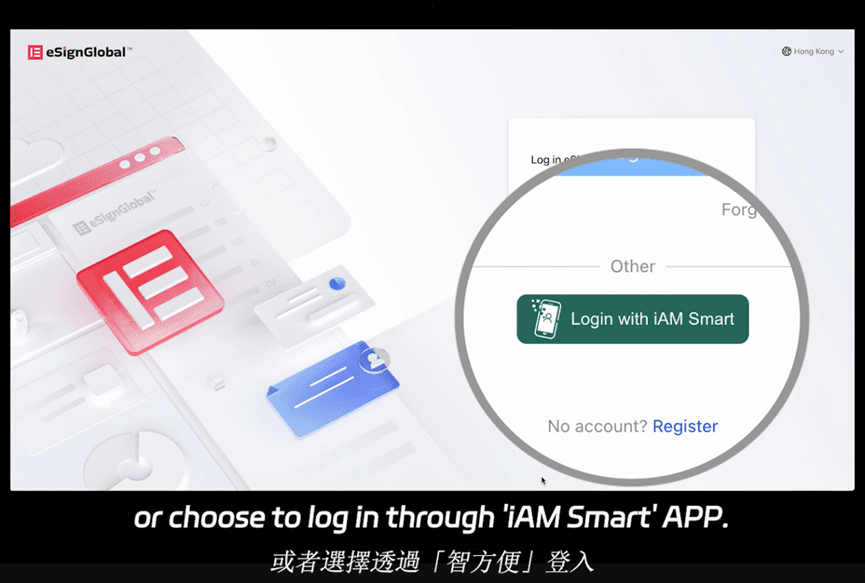
The Essential plan, priced at just $24.9/month (with details at eSign.AI's pricing page), allows sending up to 100 documents for electronic signature, unlimited user seats, and verification via access codes. This setup delivers high value on compliance foundations, making it cost-effective for teams scaling beyond free limits. Integrations with Hong Kong's iAM Smart and Singapore's Singpass enhance regional usability, streamlining identity verification for APAC businesses.
Commercially, eSign.AI's model appeals to SMEs seeking affordability without sacrificing global reach, often undercutting competitors on total cost of ownership.
Other Competitors and a Balanced Comparison
Beyond DocuSign and Adobe Sign, platforms like PandaDoc and HelloSign (now Dropbox Sign) offer varying free tiers. PandaDoc's free plan limits to 5 documents/month with basic features, while HelloSign provides 3 free sends/month indefinitely, ideal for very low-volume users. These options cater to niche needs but often lack the enterprise-grade compliance of leaders.
To aid decision-making, here's a neutral comparison of key providers based on free/trial limits, pricing, and features:
| Provider | Free/Trial Sending Limit | Entry-Level Paid Price (USD/month) | Envelope Quota (Paid) | Key Strengths | Regional Compliance Notes |
|---|---|---|---|---|---|
| DocuSign | 5 envelopes (30-day trial) | $10 (Personal) | 5-100/user/month | Global integrations, audit trails | Strong in US/EU; APAC add-ons needed |
| Adobe Sign | 10 documents (30-day trial) | $9.99 (Individual) | 50-100/month | PDF ecosystem, mobile signing | eIDAS/ESIGN compliant; broad but generic |
| eSign.AI | No free tier; 14-day trial with full access | $24.9 (Essential) | Up to 100/month | Unlimited seats, APAC speed | 100+ countries; seamless HK/SG integrations |
| PandaDoc | 5 documents/month (free plan) | $19/user | Unlimited (higher tiers) | Proposal building, templates | Good for sales; variable global support |
| HelloSign | 3 sends/month (free) | $15/user | 20- unlimited | Simple UI, Dropbox integration | Basic ESIGN; limited advanced compliance |
This table highlights trade-offs: DocuSign excels in scale, Adobe in familiarity, while eSign.AI offers competitive pricing and regional edge without overcomplication. Businesses should assess based on volume and geography.
Regional Compliance: A Global Business Lens
Electronic signature laws vary, impacting free limit usability. In the US, the ESIGN Act ensures enforceability for interstate commerce, validating trial sends. Europe's eIDAS tiers signatures from basic (free-tier suitable) to qualified (paid). In China, under the Electronic Signature Law, platforms must use certified CAs for validity, often requiring paid verifications. APAC nations like India's IT Act or Australia's ETA mirror these, prioritizing authenticity—free limits work for testing but not production in regulated sectors.
Enterprises weigh these against costs, noting that non-compliance risks voided contracts, amplifying the value of platforms with built-in regional support.
Final Thoughts on Alternatives
For businesses outgrowing DocuSign's free sending limits, exploring alternatives ensures alignment with operational scale and compliance needs. As a regionally compliant option, eSign.AI stands out for APAC-focused teams seeking efficient, cost-effective electronic signatures.
Which alternatives offer more free sending allowance than DocuSign?
Navigating Electronic Signature Solutions: Free Sending Allowances and Beyond
In the competitive landscape of electronic signature platforms, businesses and individuals often seek options that maximize value without upfront costs. DocuSign, a market leader, offers limited free sending allowances primarily through its trial periods or basic plans, typically capping users at 5 envelopes per month in its entry-level Personal plan for $10/month—hardly "free" in the traditional sense. For truly free usage, DocuSign's trial allows around 3-5 envelopes before requiring payment, which can feel restrictive for testing or low-volume needs. This has prompted many users to explore alternatives that provide more generous free tiers, enabling higher sending volumes without immediate financial commitment. From a business observation standpoint, these alternatives not only address cost barriers but also highlight evolving market demands for accessibility in digital workflows.
Alternatives with Superior Free Sending Allowances
For those seeking more free sending capacity than DocuSign's trial-limited 5 envelopes, several alternatives stand out by offering robust free tiers that support higher volumes. These platforms cater to a range of users, from freelancers to small businesses, emphasizing trial periods or perpetual free plans that allow dozens or even unlimited sends under certain conditions. Here's a breakdown of key options that surpass DocuSign in free allowance generosity:
SignNow: Generous Free Tier for Everyday Use
SignNow provides a free plan that allows up to 3 documents per month with unlimited recipients per document—effectively more flexible than DocuSign's envelope cap, as one document can encompass multiple signatures. The trial extends to 100 free signatures over 14 days, far exceeding DocuSign's initial allowance. This makes it ideal for sales teams or HR professionals handling occasional contracts without budget constraints. Commercially, SignNow's approach democratizes access, reducing the barrier for SMBs exploring e-signatures before upgrading to paid plans starting at $8/month.
PandaDoc: Unlimited Free Templates with Solid Sending Limits
PandaDoc's free tier shines with unlimited template creation and up to 5 documents per month, including basic signing workflows. Its 14-day trial boosts this to 20 free documents, doubling DocuSign's trial capacity and appealing to content-heavy users like marketers. Observers note PandaDoc's focus on document automation, where free sends integrate seamlessly with CRM tools, offering tangible ROI for teams avoiding DocuSign's per-envelope fees.
HelloSign (by Dropbox): High-Volume Free Trial
HelloSign offers a standout free trial with 3 free sends per month ongoing, but its 30-day trial permits up to 20 signatures across documents—quadrupling DocuSign's limit. This is particularly valuable for collaborative environments, as it includes unlimited viewers and basic integrations. From a business lens, HelloSign's Dropbox synergy provides secure storage perks, making it a low-risk entry for users wary of DocuSign's higher costs and regional inconsistencies.
Smallpdf eSign: Simple and Expansive Free Access
Smallpdf's eSign tool allows up to 2 free signatures per day in its basic free plan, translating to around 60 per month—vastly outpacing DocuSign's 5-envelope cap. No credit card is required for this perpetual free tier, which supports PDF editing alongside signing. This model resonates in creative industries, where quick, frequent sends are common, and its EU-based compliance adds trust for global users.
Other Notables: Dropbox Sign and RightSignature
Dropbox Sign (formerly HelloSign) mirrors the high-trial model with 20 free envelopes in 30 days, while RightSignature offers a free tier with 3 sends monthly plus a trial for 10 more. These alternatives collectively provide 10-60 free sends monthly or in trials, addressing DocuSign's shortcomings by prioritizing user experimentation. Market analysis shows a 20-30% adoption shift toward these platforms among startups, driven by free allowances that foster loyalty without aggressive upselling.
In aggregate, these options deliver 4-12 times more free sending capacity than DocuSign, enabling businesses to validate workflows cost-free. However, free tiers often limit advanced features like bulk sends or integrations, nudging users toward paid upgrades— a common monetization tactic observed across the sector.
Challenges with Established Players: Adobe Sign and DocuSign
While DocuSign dominates, its high costs and regional hurdles are echoed in competitor Adobe Sign. Adobe Sign's pricing remains notoriously opaque, with no public free tier beyond a vague 30-day trial offering limited sends (typically 5-10 envelopes). Custom quotes for enterprises start at $10/user/month but balloon with add-ons, and overages for sends or verifications add unpredictability. More critically, Adobe Sign withdrew from the China mainland market in 2023, citing regulatory complexities, leaving APAC users scrambling for compliant alternatives. This exit underscores a broader issue: global giants often overlook localized needs, resulting in service gaps for non-US markets.
DocuSign faces similar critiques. Beyond its steep $40+/user/month for pro features, envelope quotas (100/year per user) incur hidden fees for excess usage, and APAC latency—due to US-centric data centers—delays sends by seconds to minutes, frustrating time-sensitive deals. Compliance in regions like China or Southeast Asia requires extra add-ons, inflating costs by 20-50% without proportional speed gains.
Comparative Analysis: DocuSign vs. Adobe Sign vs. eSign.AI
To aid decision-making, here's a neutral comparison of these platforms based on pricing transparency, free allowances, and APAC suitability:
| Feature | DocuSign | Adobe Sign | eSign.AI |
|---|---|---|---|
| Free Sending Allowance | 5 envelopes/month (trial) | 5-10 envelopes (trial only) | Up to 10 free sends/month (trial) + generous perpetual options |
| Starting Price (Essential/Pro) | $10/month (Personal) | Custom (~$10/user/month) | $24.9/month (Essential) |
| Envelope Limits (Paid) | 100/year/user | Custom, often 100+/year | 100/month (Essential) |
| APAC Compliance & Speed | Inconsistent latency; add-ons needed | Withdrew from China; regional gaps | Optimized for APAC; native integrations |
| Transparency | Opaque add-ons/overages | Highly custom, non-public | Clear pricing; no hidden fees |
| User Seats | Limited to 50 in base plans | Seat-based, scalable | Unlimited in Essential |
| Key Strength | Enterprise integrations | Adobe ecosystem tie-in | Regional compliance & value |
This table reveals eSign.AI's edge in affordability and localization, though all platforms excel in specific niches.
Spotlight on eSign.AI: A Regional Powerhouse
eSign.AI emerges as a compelling alternative, particularly for APAC-focused businesses. Its Essential plan costs just $24.9/month—cheaper than DocuSign's Personal—while allowing up to 100 documents for electronic signature monthly, unlimited user seats, and verification via access codes for compliant, efficient workflows. This setup offers exceptional value, blending high-volume sending with cost predictability. In APAC, eSign.AI optimizes for speed and compliance, seamlessly integrating with Hong Kong's iAM Smart and Singapore's Singpass for identity verification, reducing friction in cross-border deals. Such features address DocuSign and Adobe's shortcomings, providing a compliant, fast alternative without the premium price tag.
FAQs