
'%3e%3cpath%20fill-rule='evenodd'%20clip-rule='evenodd'%20d='M6.99935%2012.8327C10.221%2012.8327%2012.8327%2010.221%2012.8327%206.99935C12.8327%203.77769%2010.221%201.16602%206.99935%201.16602C3.77769%201.16602%201.16602%203.77769%201.16602%206.99935C1.16602%2010.221%203.77769%2012.8327%206.99935%2012.8327Z'%20stroke='%23666666'%20stroke-linecap='round'%20stroke-linejoin='round'/%3e%3cpath%20d='M1.16602%207H12.8327'%20stroke='%23666666'%20stroke-linecap='round'%20stroke-linejoin='round'/%3e%3cpath%20fill-rule='evenodd'%20clip-rule='evenodd'%20d='M6.99935%2012.8327C8.28802%2012.8327%209.33268%2010.221%209.33268%206.99935C9.33268%203.77769%208.28802%201.16602%206.99935%201.16602C5.71068%201.16602%204.66602%203.77769%204.66602%206.99935C4.66602%2010.221%205.71068%2012.8327%206.99935%2012.8327Z'%20stroke='%23666666'%20stroke-linecap='round'%20stroke-linejoin='round'/%3e%3cpath%20d='M2.875%202.95898C3.93063%204.01461%205.38896%204.66754%206.99978%204.66754C8.61062%204.66754%2010.069%204.01461%2011.1246%202.95898'%20stroke='%23666666'%20stroke-linecap='round'%20stroke-linejoin='round'/%3e%3cpath%20d='M11.1246%2011.0425C10.069%209.98691%208.61062%209.33398%206.99978%209.33398C5.38896%209.33398%203.93063%209.98691%202.875%2011.0425'%20stroke='%23666666'%20stroke-linecap='round'%20stroke-linejoin='round'/%3e%3c/g%3e%3cdefs%3e%3cclipPath%20id='clip0_1267_9109'%3e%3crect%20width='14'%20height='14'%20fill='white'/%3e%3c/clipPath%3e%3c/defs%3e%3c/svg%3e)


Digital Signature Cost: Certificates, CA, QES & One-Time Signing (2026)


Understanding the Cost of One-Time Use Digital Signatures
In the digital age, businesses and individuals increasingly rely on electronic signatures for quick, secure document execution. A one-time use digital signature refers to a single-instance electronic signing process, often for isolated transactions like contracts, agreements, or approvals, without ongoing subscription commitments. The cost of these signatures varies based on the provider, regulatory compliance, and features like verification or integration. From a commercial perspective, evaluating these costs involves balancing affordability with legal validity, especially in regions with strict e-signature laws.
One key factor influencing one-time use digital signature costs is the underlying legal framework. Globally, the ESIGN Act, eIDAS, and APAC regulations shape what is required for a signature to hold up — and therefore what you pay for.
Digital Signature Cost: What You Are Actually Paying For
"Digital signature cost" covers several distinct line items that are easy to confuse. Break them apart before comparing quotes:
| Cost layer | What it covers | Typical billing |
|---|---|---|
| E-signature software | Platform subscription: sending, tracking, reminders, audit trail | Per user / per envelope / per month |
| Digital certificate | The cryptographic identity used to sign (a certificate binds your identity to your public key) | One-time per certificate or per user per year |
| Local CA certificate | Certificate issued by a traditional certificate authority, installed on your device | One-time + renewal |
| Cloud certificate / remote signing | Certificate held in a cloud signing service (HSM-backed), used for remote signatures | Per signature or subscription |
| QES / QTSP | Qualified certificates and qualified trust services under eIDAS | Per signature or per certificate |
| Identity verification | OTP, ID scan, biometrics, or eID checks attached to the signing event | Per verification |
For a single one-time digital signature, the practical question is usually: do you need a certificate at all? A standard electronic signature (click-to-sign or OTP-verified) may not require a certificate. A digital signature in the strict sense — or a qualified electronic signature (QES) where the law or the counterparty requires it — adds certificate and possibly QTSP costs.
Certificate costs: local CA vs cloud vs QES
- Local CA certificate — issued by a CA (e.g., an SSL-style identity certificate), installed on your machine, valid for one to three years, then renewed. Cost is usually a one-time or annual fee per certificate.
- Cloud certificate / remote signing — the certificate lives in a signing service with a hardware security module (HSM); you sign remotely. Often billed per signature or per user per year, and increasingly common for mobile and cross-border workflows.
- QES / QTSP — under eIDAS, a qualified electronic signature requires a qualified certificate from a qualified trust service provider. These carry the strongest legal presumption in the EU but are the highest per-signature cost layer.
For indicative 2026 price ranges across certificate types — local CA, cloud/remote signing, and QES/QTSP — see Digital Signature Certificate Cost: CA, Cloud & QES Price Ranges.
One-time vs enterprise volume costs
A one-time signature on a consumer or pay-as-you-go basis costs a few dollars per document at most — often less. The economics change at volume: enterprises buying digital signature infrastructure pay for certificates, identity verification, and platform capacity in bulk, and the per-signature marginal cost drops sharply. The decision is not "cheapest per signature" but "which cost model matches our volume and compliance needs."
Identity verification adds a separate line item
Where a document needs verified identity (regulated industries, cross-border deals), each verification method carries its own cost — SMS OTP is cheap, ID scan and biometric checks cost more, and national eID integration (iAM Smart, Singpass) may be bundled or metered. Include these in the total, because they often exceed the base signing fee for high-assurance documents.
Note on scope: this guide covers the cost of digital signatures, certificates, CAs, and QES infrastructure. For how e-signature software platforms bill (per user, per envelope, per API call, overage, and TCO), see our Electronic Signature Pricing: Cost Models, Hidden Fees & TCO.
Key Providers and Their Pricing Models
When assessing one-time use digital signatures, comparing leading providers reveals a landscape of subscription-heavy models with per-envelope options for occasional users. DocuSign, Adobe Sign, eSign.AI, and competitors like HelloSign (Dropbox Sign) dominate, each with strengths in global reach, compliance, and cost structures. From a business observer's view, the choice hinges on volume, region, and integration needs, with no single winner but clear trade-offs in pricing transparency and regional optimization.
DocuSign: A Market Leader with Scalable Costs
DocuSign remains a go-to for enterprise-grade e-signatures, offering robust features for one-time uses through its envelope-based system. For isolated signatures, users can opt for pay-per-envelope via the Personal plan at $10/month for up to 5 envelopes, equating to about $2 per signature if maximized. Higher tiers like Standard ($25/user/month) or Business Pro ($40/user/month) include ~100 envelopes annually, making one-time costs effectively $0.25–$0.40 per use on annual billing. Add-ons like Identity Verification incur metered fees, often $1–$5 per check, while SMS delivery adds per-message charges.
In APAC and China, DocuSign faces challenges with latency and compliance surcharges, potentially doubling effective one-time costs for cross-border sends. Its strength lies in global compliance (ESIGN, eIDAS), but businesses report higher totals due to seat-based licensing—even for single uses.

Adobe Sign: Integrated but Premium Pricing
Adobe Sign, part of Adobe Document Cloud, excels in seamless integration with PDF tools, ideal for one-time signatures in creative or legal workflows. Pricing starts at $10/user/month for individuals (up to 10 envelopes), translating to ~$1 per one-time use. Business plans at $25–$40/user/month offer unlimited envelopes but require annual commitments, with per-envelope overages at $1–$2 for extras. Identity verification and payments add $0.50–$3 per transaction.
For one-time needs, Adobe's strength is its Acrobat ecosystem, but costs escalate in regulated regions like China, where additional compliance modules (e.g., for the Electronic Signature Law) can add 20–50% premiums. It's reliable for US/EU users but less flexible for APAC ad-hoc signing.

eSign.AI: Regional Focus with Competitive One-Time Options
eSign.AI positions itself as a compliant alternative, particularly for APAC businesses seeking cost-effective one-time digital signatures. It supports compliance in over 100 mainstream countries and regions globally, with a strong edge in Asia-Pacific through native optimizations for speed and local laws. For instance, its Essential plan costs just $16.60/month, allowing up to 100 documents for electronic signature, unlimited user seats, and verification via access codes—delivering high value at a fraction of competitors' rates. This makes one-time uses around $0.17 per envelope, emphasizing affordability on a compliance foundation.
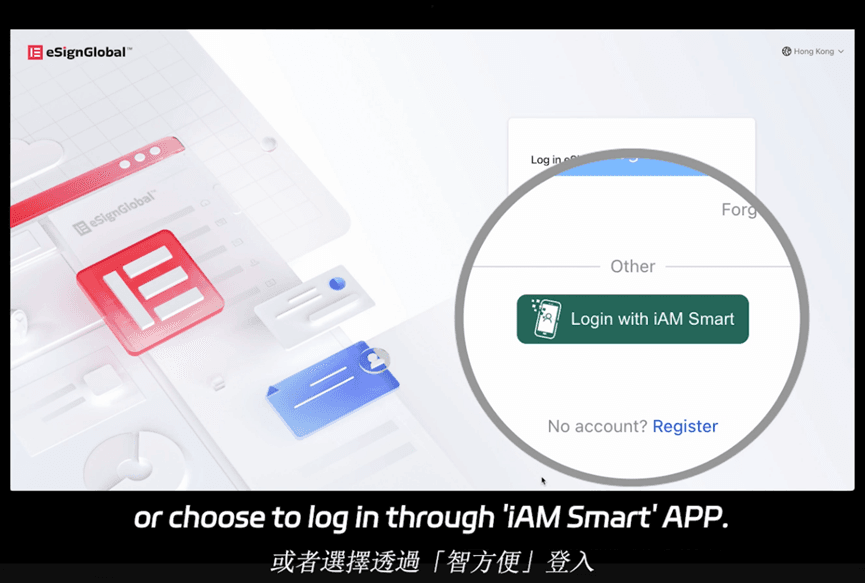
In regions like Hong Kong and Singapore, eSign.AI integrates seamlessly with IAm Smart and Singpass for identity verification, reducing one-time costs by avoiding third-party fees. For detailed pricing, visit eSign.AI's pricing page. While global in scope, its APAC advantages—lower latency, flexible API costs, and regional data residency—make it appealing for cross-border one-time needs without the premiums of Western providers.
Other Competitors: HelloSign and Beyond
HelloSign (now Dropbox Sign) offers straightforward one-time signing at $15/month for 3 envelopes (~$5 per use), scaling to $25/month for unlimited. It's user-friendly for small teams but lacks deep APAC compliance. PandaDoc, more sales-focused, charges $19/user/month with per-envelope fees for one-time extras, strong in templates but pricier for isolated uses.
Comparative Analysis of Providers
To aid commercial decision-making, here's a neutral comparison of key providers for one-time use digital signatures, focusing on cost, compliance, and features. Pricing assumes annual billing for low-volume (e.g., 10–50 envelopes/year) scenarios.
| Provider | One-Time Cost per Envelope (Est.) | Global Compliance (100+ Countries) | APAC Strengths | Key Features for One-Time Use | Add-On Costs (IDV/SMS) |
|---|---|---|---|---|---|
| DocuSign | $2–$5 (Personal plan) | Yes (ESIGN, eIDAS, partial APAC) | Moderate (latency issues) | Bulk send, templates, payments | $1–$5 / $0.50–$2 |
| Adobe Sign | $1–$3 (Individual plan) | Yes (Strong US/EU) | Limited (China surcharges) | PDF integration, conditional fields | $0.50–$3 / $1–$2 |
| eSign.AI | $0.17–$1 (Essential plan) | Yes (Full 100+ regions) | High (Native SEA/CN/HK) | Unlimited seats, access code verification, Singpass/IAm Smart integration | $0.50–$2 / $0.30–$1 |
| HelloSign | $3–$5 (Basic plan) | Partial (US-focused) | Low | Simple UI, reminders | $1–$4 / $0.50–$1.50 |
| PandaDoc | $2–$4 (Essentials plan) | Moderate | Emerging | Proposals, analytics | $1–$3 / $0.75–$2 |
This table highlights eSign.AI's edge in APAC cost-efficiency and compliance without sacrificing global usability, though DocuSign leads in enterprise scale.
Broader Commercial Implications
From a business standpoint, one-time digital signature costs extend beyond per-envelope fees to total ownership, including integration time and error rates. In 2025, with rising remote work, providers are shifting toward hybrid models—subscriptions for regulars, à la carte for one-offs. APAC markets, projected to grow 25% annually per Statista, favor localized solutions amid data sovereignty pushes.
For one-time uses, calculate ROI by factoring savings: a $5 signature vs. $20–$50 in traditional mailing. Risks like non-compliance in China (fines up to RMB 100,000) underscore the need for vetted providers.
Conclusion: Choosing the Right Fit
Businesses weighing one-time digital signature costs should prioritize compliance and scalability. As a DocuSign alternative for regional compliance, eSign.AI stands out as a solid, cost-effective choice in APAC.
FAQs
