China mainland / Electronic Signature Law / evidence workflow

Digital Signature in China Mainland: Start with the Reliable-Signature Route

Mainland China e-signing design starts with the Electronic Signature Law, document scope, and evidence requirements. Use this guide to separate routine electronic contracts from reliable electronic signature routes, special-form documents, and data-governance review.

Business team reviewing contract documents for a China mainland digital signature workflow

Official-source baseline

China mainland e-signing starts with law, scope, and evidence

Electronic Signature LawArticle 13 defines reliable electronic signatures. Article 14 gives a reliable electronic signature the same legal effect as a handwritten signature or seal. Official source: Ministry of Industry and Information Technology.
Civil Code data-message recognitionThe Civil Code recognizes data messages such as email and electronic data interchange as written form when the content can be presented tangibly and accessed for reference. Official source: State Council.
Evidence still needs to be retrievableThe Supreme People's Court evidence rules treat electronic data as evidence and set factors for reviewing its authenticity. Official source: Supreme People's Court.
Personal information and data controls matterSigning workflows process identity, contact, device, document, and audit records. Data handling should be reviewed under the Personal Information Protection Law and Data Security Law. Official source: National People's Congress.

Legal definition

A reliable electronic signature is a specific legal route

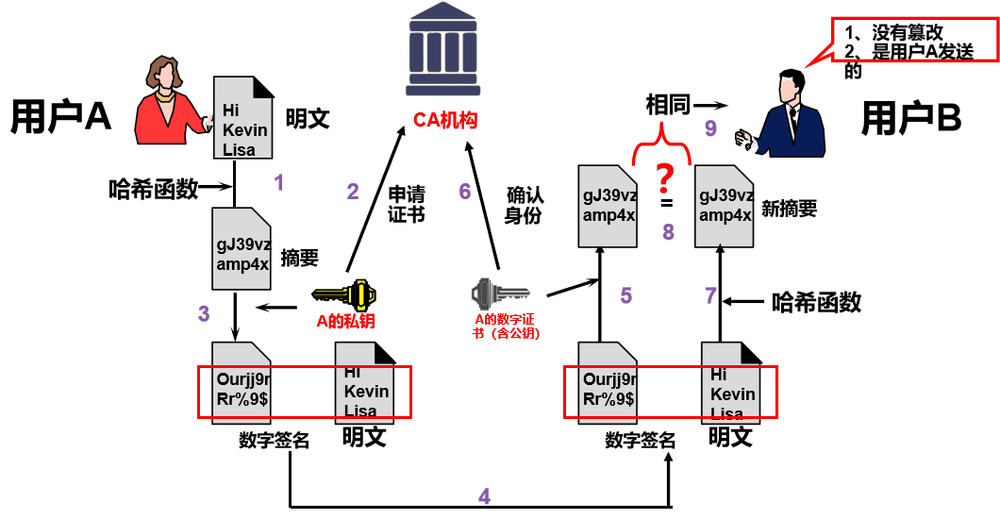
Do not treat every click, image, or signature field as automatically equivalent. Article 13 focuses on signer linkage, signer control, and detectable changes to both the signature and the signed data message.

1

Linked to the signer and controlled by the signer

When the signature creation data is used, it should be exclusive to the electronic signer and under that signer's control.

2

Changes to the signature can be detected

The process should preserve integrity records that make later changes to the electronic signature detectable.

3

Changes to the signed content can be detected

The process should preserve the completed document and integrity evidence so later changes to content or form can be detected.

4

Document scope still needs review

Article 3 excludes certain personal-relations, real-estate-rights, and public-utility-service documents, plus other documents where law or administrative regulations do not permit electronic records.

Legal timeline

The legal route is established, but rollout decisions remain document-specific

China's Electronic Signature Law has a mature baseline. The operational work is to map each template to the appropriate execution and evidence path.

  1. Electronic Signature Law adopted

    China established the electronic-signature framework, including data messages, reliable electronic signatures, and certification services.

  2. First amendment

    The law was amended as the electronic-transaction environment evolved.

  3. Current amended version

    The current official text is the 2019 amended Electronic Signature Law.

  4. Civil Code took effect

    The Civil Code provides an additional written-form baseline for data messages that can be tangibly presented and accessed for reference.

Route decision

Classify the document before selecting the signing method

A Mainland China rollout should not use one generic signing path for every agreement. Start with document scope, required assurance, and the evidence package that needs to be retained.

RouteTypical useWhat to confirmeSign.AI role
Routine commercial e-signingNDAs, procurement approvals, sales agreements, onboarding documents, and internal acknowledgements where electronic execution is appropriate.Document scope, counterparty acceptance, signer authority, retention period, and evidence needs.Configure templates, approvals, signer authentication, event logs, timestamps, integrity records, and archive callbacks.
Reliable electronic signature routeHigher-value or higher-risk agreements where the business wants a process designed around Article 13 reliable-signature conditions.Signer linkage, signer control, detectable changes, certificate or trust-service context where used, and retrieval of the completed evidence package.Route the signer through the selected assurance path and preserve the operational evidence required for later review.
Special-form or excluded documentDocuments involving excluded categories, registration requirements, witnessing, notarization, or sector-specific formalities.Whether electronic records are permitted and which execution method the applicable rule requires.Hold the template for legal review and enable the workflow only after the permitted execution route is confirmed.
Cross-border and data-sensitive workflowMainland entities signing with regional affiliates, overseas counterparties, or systems that process signer data across borders.Document law, signer location, data collection purpose, access controls, retention, and cross-border data posture.Apply route rules by template and signer role, then return the signed record and evidence status to the system of record.
Route

Routine commercial e-signing

Typical use

NDAs, procurement approvals, sales agreements, onboarding documents, and internal acknowledgements where electronic execution is appropriate.

What to confirm

Document scope, counterparty acceptance, signer authority, retention period, and evidence needs.

eSign.AI role

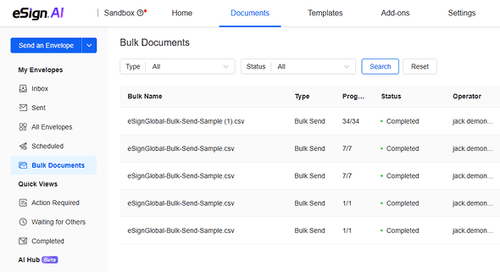
Configure templates, approvals, signer authentication, event logs, timestamps, integrity records, and archive callbacks.

Route

Reliable electronic signature route

Typical use

Higher-value or higher-risk agreements where the business wants a process designed around Article 13 reliable-signature conditions.

What to confirm

Signer linkage, signer control, detectable changes, certificate or trust-service context where used, and retrieval of the completed evidence package.

eSign.AI role

Route the signer through the selected assurance path and preserve the operational evidence required for later review.

Route

Special-form or excluded document

Typical use

Documents involving excluded categories, registration requirements, witnessing, notarization, or sector-specific formalities.

What to confirm

Whether electronic records are permitted and which execution method the applicable rule requires.

eSign.AI role

Hold the template for legal review and enable the workflow only after the permitted execution route is confirmed.

Route

Cross-border and data-sensitive workflow

Typical use

Mainland entities signing with regional affiliates, overseas counterparties, or systems that process signer data across borders.

What to confirm

Document law, signer location, data collection purpose, access controls, retention, and cross-border data posture.

eSign.AI role

Apply route rules by template and signer role, then return the signed record and evidence status to the system of record.

Evidence workflow

Turn the legal route into a repeatable signing operation

The product job is operational: classify the document, route the signer, preserve integrity evidence, and return a retrievable record to the business system.

  1. 1

    Classify

    Tag each template by document scope, risk level, signer role, required assurance, and data-handling posture.

  2. 2

    Route

    Send the agreement through the configured identity, approval, and signing path. Escalate special-form documents for legal review.

  3. 3

    Preserve

    Keep the completed document, timestamps, integrity records, signing events, delivery history, and certificate context where used.

  4. 4

    Return

    Write completion status and the evidence package back to HR, CRM, ERP, procurement, legal, or archive systems.

Deployment scenarios

Where China mainland teams usually need governed signing workflows

Use document-specific rules and evidence retention across common commercial operations.

HR and workforce operations

Employment-related agreements, policy acknowledgements, onboarding documents, and internal approvals need reusable templates and controlled access.

Sales and procurement

Sales contracts, NDAs, vendor onboarding, purchase agreements, and renewals need signer authority checks and completion callbacks.

Group and regional contracting

Mainland entities coordinating with Hong Kong, Singapore, Malaysia, and overseas affiliates need route decisions by document and signer location.

System-triggered agreements

ERP, CRM, HR, OA, procurement, and legal systems need API-triggered signing plus evidence return to the system of record.

Customer workflow proof

Workflow examples from China-linked enterprise operations

These examples illustrate template, approval, circulation, and archive workflows. They are operational proof points, not a claim that every document used the same legal route or signature method.

Goldlion enterprise contract workflow case visual

Goldlion

Retail and brand operations can standardize contract templates, approval paths, signing status, and record retrieval across teams.

CSCEC International enterprise workflow case visual

CSCEC International

Project and enterprise teams can coordinate multi-party document circulation, approval control, signing completion, and archive return.

Mainland China and Hong Kong comparison

Mainland China and Hong Kong comparison

Compare eight legal, identity, evidence, and data differences before planning a cross-border workflow.

FAQ

Common questions about digital signatures in China mainland

China mainland workflow review

Plan the signing route before scaling the workflow

Bring your document types, signer roles, existing systems, assurance needs, data flow, and archive requirements into a China mainland signing review.